Miami Homeowners: Your 2026 Hurricane Season Prep Guide — Citizens Insurance Rate Cuts Up to 14% and $10,000 Storm Grants

With hurricane season starting in just 17 days â June 1, 2026 â now is the most important window of the year for Miami and South Florida homeowners to take action. And this year, there is genuinely good news to go along with the annual call to prepare: Citizens Property Insurance is delivering rate reductions of up to 14 percent in Miami-Dade and Broward counties, the state's My Safe Florida Home program offers up to $10,000 in storm-hardening grants, and federal forecasters are predicting a somewhat below-normal season. Here is everything Miami homeowners need to know right now â before the first storm has a chance to form.
What the 2026 Hurricane Season Forecast Actually Says
The Atlantic hurricane season officially runs from June 1 through November 30, with peak activity typically occurring between mid-August and mid-October. For the 2026 season, Colorado State University's April 9 forecast calls for a slightly below-normal season â roughly 75 percent of the long-term average in accumulated cyclone energy â largely because weak La Nina conditions are expected to transition into El Nino during the heart of storm season. El Nino typically increases wind shear over the Atlantic, which tends to suppress tropical storm development.
NOAA is scheduled to release its official 2026 Atlantic Hurricane Season Outlook on May 21 â just six days from today â during a news conference at the NOAA Aircraft Operations Center in Lakeland, Florida. That announcement will give Miami homeowners a more complete picture of what forecasters expect for the months ahead.
One important change this season: the National Hurricane Center has updated its forecast cone graphics for 2026. The new operational cone now includes tropical storm and hurricane watches and warnings for inland areas â not just the coast. The NHC is also testing an experimental ellipse-based cone that captures 90 percent of track forecast possibilities, up from the traditional 67 percent. For Miami-Dade residents, this is especially relevant because South Florida's geography makes both storm surge along the coast and inland flooding serious threats, even for homeowners who do not live directly on the water.
A critical point that experienced South Florida homeowners already know: a below-average season forecast does not mean Miami is safe. It only takes one storm making landfall near South Florida to cause catastrophic damage. Hurricane Andrew in 1992 was a below-average season. Irma in 2017 crossed the Florida Keys and swept up the peninsula during what was ultimately an active season â but Miami-Dade still saw significant damage. The forecast is context, not a guarantee of safety.
Citizens Property Insurance Is Cutting Rates for Miami-Dade and Broward Homeowners
One of the most significant developments for South Florida homeowners heading into this hurricane season is a meaningful reduction in Citizens Property Insurance premiums. According to Citizens and the Florida Office of Insurance Regulation, the 2026 rate adjustments took effect at policy renewal beginning in Spring 2026 â with official implementation on June 1, 2026.
Here is what those numbers look like for Miami-Dade and Broward homeowners specifically:
- Miami-Dade County: Approximately 42,000 Citizens policyholders will see an average premium reduction of 13.9 to 14.0 percent.
- Broward County: Approximately 27,000 Citizens policyholders will receive an average reduction of 14.1 percent â the largest of any county in the state.
- Statewide average: The overall Citizens rate reduction across Florida averages 8.7 percent, with more than 330,000 policyholders receiving some form of rate decrease.
Governor DeSantis and the Florida Office of Insurance Regulation attributed these savings to the comprehensive insurance and tort reform legislation passed in recent years, which reduced lawsuit abuse that was inflating insurer losses across the state. Multiple private insurers have also announced rate reductions of 5 to 10 percent as the market stabilizes â meaning some Miami homeowners who were forced onto Citizens during the crisis years may now find competitive private market options again.
If your Citizens renewal is coming up, contact your insurance agent now to confirm that your new rate reflects the approved reductions. Do not wait until after June 1.
My Safe Florida Home: Up to $10,000 in Storm-Hardening Grants for Miami Homeowners
Florida's My Safe Florida Home program remains one of the most valuable and underutilized resources available to Miami and South Florida homeowners. The program offers two things: a free wind mitigation inspection and a matching grant of up to $10,000 to fund qualifying home improvements.
Here is how the grant works: the state pays $2 for every $1 a homeowner spends on approved storm-hardening upgrades, up to a total of $10,000 in state funding. Qualifying improvements include impact-resistant windows and doors, roof covering upgrades, garage door reinforcement, and secondary water barrier installation.
To be eligible for the grant, homeowners must have a homestead exemption on the property and a building permit issued before January 1, 2008. There is no income cap and no home value limit for the free wind mitigation inspection itself â any owner of a site-built, single-family detached home or townhouse in Florida can apply for the inspection, even if they later decide not to pursue the grant.
Governor DeSantis's proposed 2026-2027 state budget includes over $600 million for the My Safe Florida Home and Condo programs, including $480 million specifically designated to clear a backlog of approximately 45,000 homeowners who completed inspections but are still waiting for grant funding. If you have been waiting, that backlog is expected to begin moving in the coming months.
To apply or check your status, visit mysafeflhome.com.
Your Hurricane Season Prep Checklist for Miami Homes
The Florida Division of Emergency Management designated May 3 through May 9 as 2026 Florida Hurricane Preparedness Week, and the timing is intentional: the weeks before June 1 are when preparation is most effective and least stressful. Once a storm enters the cone of uncertainty, supplies sell out, contractors are fully booked, and insurance changes are no longer possible.
For Miami and South Florida homeowners specifically, here is what to do in the next two weeks:
Review your insurance coverage thoroughly. Read your full homeowners policy â not just the summary page. Know your named storm deductible, which in Florida typically ranges from 2 to 10 percent of your home's insured value (not the sale price). A $500,000 insured home with a 5 percent hurricane deductible means you absorb $25,000 out of pocket before coverage kicks in after a named storm. Make sure your insured replacement cost reflects today's construction costs, which have risen significantly since many policies were last updated.
Confirm you have separate flood insurance. Standard homeowners policies do not cover flood damage from storm surge or rising water. Miami-Dade County is particularly vulnerable to both coastal storm surge and inland flooding â and many homeowners who are not in a designated flood zone are still at real risk. The National Flood Insurance Program (NFIP) and private flood insurance options are both available. If you do not have flood coverage, obtain a quote now. Coverage typically has a 30-day waiting period before it takes effect.
Document your property. Take photos and video of every room in your home, all major appliances and electronics, and the full exterior. Store these records in a cloud service or email them to yourself so they survive even if your home does not. This documentation is critical for insurance claims after a storm.
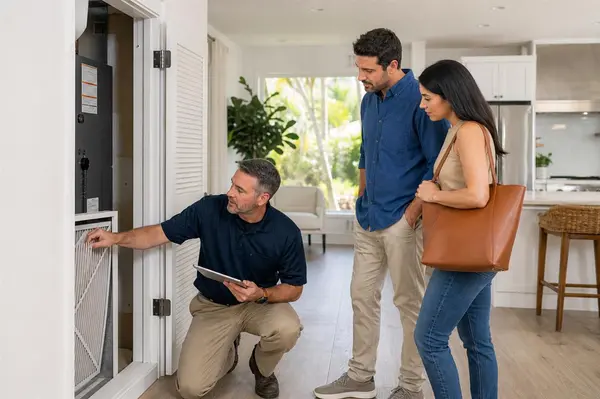
Inspect your roof and garage door. Roof failure and garage door failure are the two leading causes of catastrophic residential loss during hurricanes in South Florida. Homes built before the late 1990s often lack hurricane straps or clips that tie the roof structure to the wall framing â these became mandatory under Florida's updated building code following Hurricane Andrew. If your home was built before 1994, have a licensed contractor inspect whether your roof is properly anchored. Garage doors should meet current South Florida Wind Code standards; if yours does not, reinforcement braces are available and relatively affordable.
Assemble your supply kit now. Water (one gallon per person per day for at least seven days), nonperishable food, batteries, a battery-powered or hand-crank radio, flashlights, medications, and a portable generator (for outdoor use only â generator use indoors is fatal). Buying these items now avoids the shortage that always hits stores once a storm enters the Gulf or Atlantic with a South Florida track.
Know your evacuation zone. Miami-Dade County uses a lettered evacuation zone system (A through F), with Zone A being highest risk. You can look up your zone at the Miami-Dade County emergency management website. If you live in a mobile home, a low-lying area, or directly on the water, know your nearest shelter and route before the season starts.
What This Means for Miami Home Buyers
If you are currently shopping for a home in Miami, South Florida, or anywhere in Miami-Dade or Broward, hurricane preparedness is a financial issue as much as a safety one. Before making an offer, ask about the home's wind mitigation rating, roof age, impact window and door installations, and current insurance costs. A home with an older roof, no impact windows, and no hurricane shutters in Miami will carry significantly higher insurance premiums than a well-hardened comparable property â sometimes by $5,000 to $10,000 or more per year. Work with a knowledgeable local agent who can help you evaluate total cost of ownership, not just the purchase price.
Also confirm whether the property is in a FEMA flood zone and whether flood insurance is required by your lender. In many Miami-Dade neighborhoods â including areas that do not feel flood-prone â the answer is yes.
What This Means for Miami Home Sellers
If you are listing a home in Miami this spring or summer, now is a smart time to make storm-hardening investments visible and documented. Buyers in Miami pay attention to impact windows, newer roofs, and generator capacity â especially buyers relocating from out of state who are newly learning about South Florida's insurance market. Having a recent wind mitigation report on hand can be a selling advantage. The My Safe Florida Home inspection at mysafeflhome.com is free and the resulting report is the standard form Florida insurers use to calculate premium discounts â something a buyer's future insurer will want to see.
Price your home with realistic current insurance costs in mind. Buyers today are increasingly sophisticated about what it actually costs to own a Miami home, and inflated insurance premiums are showing up in their financing calculations.
What This Means for Current Miami Homeowners
Even if you are not buying or selling, the window between now and June 1 is genuinely valuable. Between Citizens rate reductions that could save you hundreds to thousands of dollars annually, My Safe Florida Home grants of up to $10,000, and the peace of mind that comes from knowing your coverage and your home are ready, preparation this year carries real financial and practical upside. The forecast is below average â but South Florida's relationship with hurricanes has taught every long-term resident the same lesson: you prepare every year, regardless of the forecast, because no forecast is a guarantee.
Sources
- NOAA â "NOAA to announce 2026 Atlantic Hurricane Season Outlook" â Media Advisory, May 2026 â noaa.gov
Used for NOAA outlook announcement date (May 21, 2026) and briefing details. - Colorado State University Tropical Weather & Climate Research â "Extended Range Forecast of Atlantic Seasonal Hurricane Activity" â Published April 9, 2026 â tropical.colostate.edu
Used for 2026 season activity forecast (~75% of long-term average ACE) and El Nino context. - NOAA â "National Hurricane Center to issue new forecast cone graphics for 2026 hurricane season" â Published 2026 â noaa.gov
Used for NHC cone update details including inland alerts and experimental ellipse-based cone. - Citizens Property Insurance Corporation â "Citizens Recommends Rate Cuts for Most Policyholders" â Published December 2025 / Spring 2026 implementation â citizensfla.com
Used for statewide and county-level rate reduction figures. - Live Insurance News â "South Florida Homeowners Are Getting Rate Cuts of Up to 14 Percent on Citizens Insurance" â Published 2026 â liveinsurancenews.com
Used for Miami-Dade and Broward specific rate cut percentages and policyholder counts. - Florida Office of Insurance Regulation / Executive Office of the Governor â "Governor Ron DeSantis Announces Major Insurance Rate Relief as Florida's Reforms Deliver Results" â Published January 2026 â flgov.com
Used for insurance reform context and statewide savings data. - My Safe Florida Home Program â Official Program Website â mysafeflhome.com
Used for grant eligibility requirements, matching grant structure, and application information. - Florida Division of Emergency Management â "FDEM Calls on Floridians to Prepare with 2026 Florida Hurricane Preparedness Week" â Published May 4, 2026 â floridadisaster.org
Used for Hurricane Preparedness Week dates and FDEM preparedness guidance. - WFLX / West Palm Beach â "Hurricane season insurance tips: What Florida homeowners need to know before storms hit" â Published May 14, 2026 â wflx.com
Used for insurance review guidance, named storm deductibles, and documentation recommendations. - Florida Realtors â "Storm Season's Almost Here: Check Your Coverage" â Published May 2026 â floridarealtors.org
Used for pre-season coverage review advice for homeowners. - Miami-Dade County Emergency Management â Hurricane Preparedness Resources â miamidade.gov
Used for Miami-Dade storm surge and flood vulnerability context and evacuation zone information.
Ready to buy or sell a home in Miami, Miami-Dade, or Broward? Contact William Gartin with eXp Realty for local guidance on what today's market, insurance landscape, and new construction pipeline mean for your next move. William works with buyers and sellers across Miami-Dade and Broward County â from first-time buyers navigating the Miami homes-for-sale market to experienced investors evaluating South Florida property values in 2026.
Call or text: 305-842-6097
Website: williamgartinrealestate.com
Categories
Recent Posts