How Miami Homeowners Can Organize the Garage for Summer Heat, Storm Season, and Better Daily Living
How Miami Homeowners Can Organize the Garage for Summer Heat, Storm Season, and Better Daily Living
For many Miami homeowners, the garage becomes the place where everything lands: beach chairs, bikes, tools, sports gear, holiday bins, cleaning supplies, pool floats, extra paint, luggage, hurricane supplies, pet items, and the things no one wants to decide about today. In South Florida, that clutter has an extra layer of pressure because garages also deal with heat, humidity, rain, salt air, and summer storm preparation.
As of June 3, 2026, Atlantic hurricane season has already begun, and the hottest, wettest stretch of the South Florida year is arriving. That makes early June a smart time to rethink the garage. This is not just about making the space look better. A well-organized garage can protect your belongings, make daily life easier, reduce safety risks, create room for the things you actually use, and help your home feel more valuable when a future buyer walks through.
The good news is that you do not need a full custom storage system to make a meaningful improvement. With a focused weekend plan, you can turn a crowded garage into a cleaner, safer, more functional part of your home.
Start With Zones, Not Bins
The biggest mistake homeowners make is buying storage bins before deciding what the garage needs to do. Bins help, but only after you create zones. Think of your garage as a working room with departments.
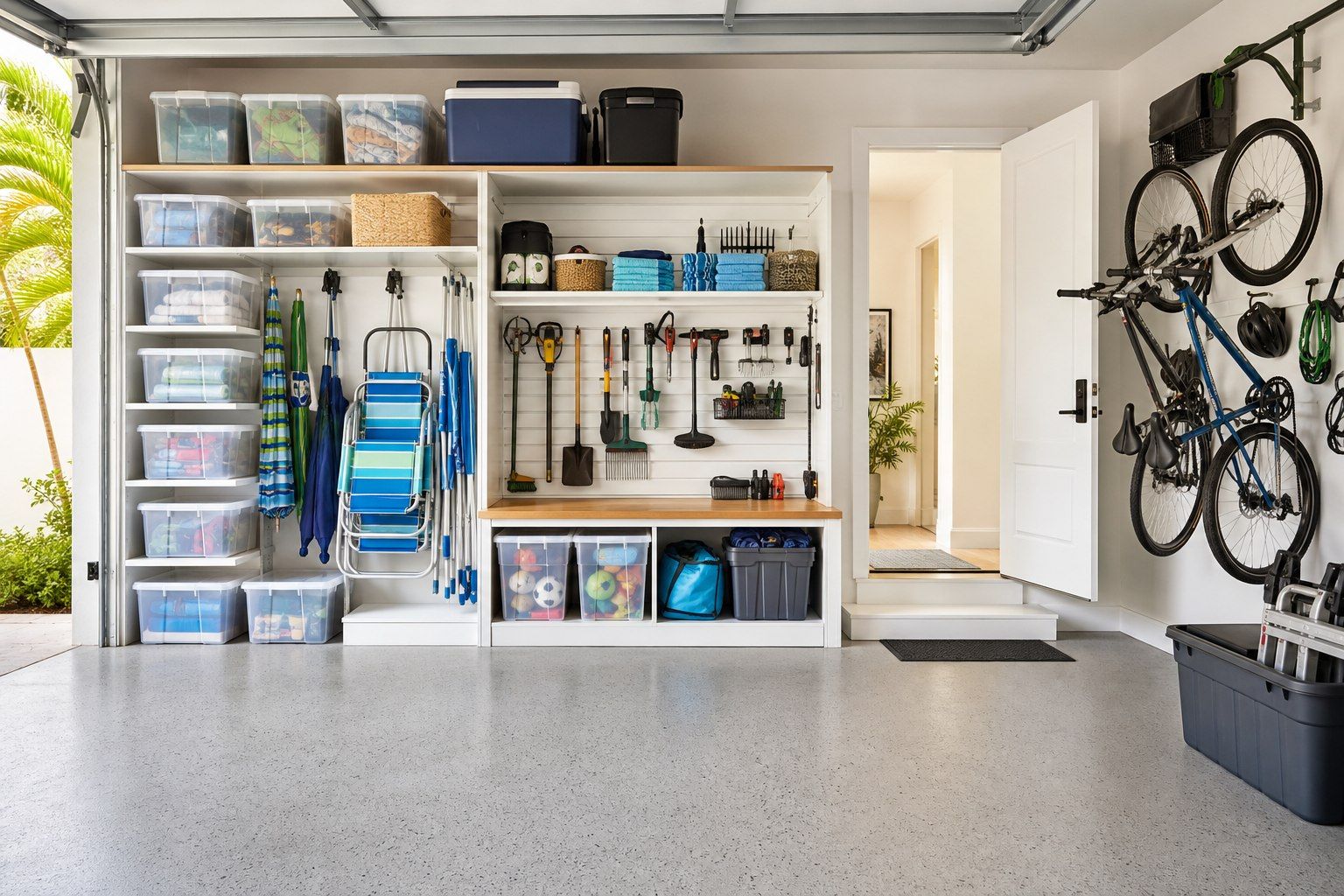
Create one zone for daily-use items such as shoes, backpacks, umbrellas, pet leashes, and reusable grocery bags. Create another for tools and home maintenance. Add a beach and pool zone for towels, chairs, coolers, floats, and sunscreen. Keep sports gear together. Store holiday decorations separately. If you keep storm-season supplies in the garage, give them a clearly marked area that is easy to reach.
This zoning approach is especially useful in Miami homes because outdoor living is part of the lifestyle. A family in Cutler Bay, Palmetto Bay, Pinecrest, or Doral may use the garage for bikes, sports equipment, beach gear, gardening tools, and hurricane supplies all in the same week. Zones keep those categories from swallowing each other.
Get Items Off the Floor
In South Florida, floor space is valuable. It keeps the garage easier to sweep, helps you spot leaks or pests sooner, and makes it less stressful to move around. It can also help protect belongings if wind-driven rain, a plumbing leak, or a wet vehicle brings water into the garage.
Start by moving lightweight items onto wall hooks, shelves, or ceiling racks. Bikes, ladders, folding chairs, beach umbrellas, and yard tools can all go vertical. Use sturdy wall-mounted tracks for tools and hooks for bags, helmets, and extension cords. Clear floor space immediately makes a garage feel larger, which is useful for daily living and resale presentation.
Avoid storing heavy items overhead unless the system is properly rated and installed. Keep the heaviest bins on lower shelves so no one has to wrestle them down from above.
Use Clear Bins, Labels, and Fewer Mystery Boxes
Opaque boxes often become storage purgatory. You know something is inside, but no one remembers what. Clear bins make the system easier because you can see the category at a glance. Add simple labels on the front so the whole household knows where things belong.
The label does not need to be fancy. Use practical categories like beach, pool, tools, car care, sports, holiday, pet, emergency kit, and donate. If a bin contains items you rarely use, write the month and year on the label. If you have not opened it in two years and it is not sentimental, seasonal, or legally important, it may be time to donate, sell, or discard it.
For Miami homeowners preparing a home for sale, this kind of garage reset can make a strong impression. Buyers do not expect every garage to look like a showroom, but they do notice whether the home appears cared for and easy to maintain.
Protect Belongings From Heat and Humidity
Miami garages can get hot. They can also hold humid air, especially during rainy season. That combination is rough on paper, cardboard, fabric, electronics, photographs, leather, and certain household items. The U.S. Environmental Protection Agency notes that controlling moisture is key to controlling mold growth and recommends reducing indoor humidity to 30 to 60 percent where possible.
Garages are not always conditioned spaces, so the goal is not perfection. The goal is smarter storage. Avoid cardboard boxes for items you care about. Use lidded plastic bins instead. Keep fabric, linens, important papers, and keepsakes inside the air-conditioned part of the home when possible. Store tools where they stay dry, and consider silica gel packs or moisture absorbers in bins that hold items vulnerable to humidity.
If the garage shares a wall or door with your living space, check for obvious gaps around the door, trim, and threshold. The U.S. Department of Energy recommends sealing air leaks and weatherstripping movable components such as doors. In an attached garage, this can support comfort and help the home feel tighter and more efficient.
Keep Safety in the Plan
Organization is not only about appearance. Garages can contain flammable liquids, electrical tools, hot surfaces, overloaded outlets, and heavy objects. The U.S. Fire Administration warns that garages and basements have additional fire safety risks because of flammable liquids, combustible storage, gas appliances, and electrical tools.
Take a few safety steps while you organize. Keep paint, fuel, solvents, and chemicals in their original containers and away from heat sources. Do not store items against the electrical panel. Avoid daisy-chaining extension cords. Keep sharp tools out of reach of children. Mount heavy items securely. If you store a ladder, make sure it is stable and not leaning where it can fall onto a car or person.
Also look at the door between the garage and the home. Make sure it closes properly. A clean transition area between the garage and the house can help keep fumes, pests, dust, and clutter from moving into the living space.
Build a Storm-Season Shelf That Is Easy to Reach
Because hurricane season runs from June 1 through November 30, it makes sense to keep some emergency supplies organized and accessible. Ready.gov recommends keeping basic supplies such as water, non-perishable food, flashlights, batteries, a first aid kit, chargers, and a backup battery. Many Miami households also keep pet supplies, copies of important documents, work gloves, plastic sheeting, and a battery-powered radio.
The garage can be a practical place for some of those supplies, but avoid burying them behind holiday decorations or old furniture. Use one or two sturdy bins, label them clearly, and keep them at waist height if possible. If a storm watch is issued, you do not want to dig through ten boxes to find batteries or a flashlight.
Keep heat-sensitive items, prescriptions, and important documents inside the air-conditioned home. The garage is useful for durable supplies, but not everything belongs there.
Make Room for the Car, Even If You Do Not Park Inside Every Day
Many South Florida garages are used more for storage than parking. That may work for your lifestyle, but try to preserve enough open space for flexibility. A garage that can still function as a garage is more useful when you need to protect a vehicle before a storm, unload groceries during heavy rain, set up a home project, or prepare the house for showings.
If parking inside is unrealistic, aim for a clear center aisle and a clean path to the main door. Buyers touring homes in Coral Gables, Weston, Kendall, or Homestead often notice whether storage feels manageable. A garage packed wall to wall can quietly suggest that the home lacks space, even when the square footage is strong.
Add Small Upgrades That Feel Polished
Once the clutter is under control, a few affordable upgrades can make the garage feel finished. Add brighter LED lighting. Paint stained walls. Use matching bins on open shelving. Install a durable wall rack for tools. Add a small bench or landing shelf near the entry door. Consider a washable mat at the door into the house. If the concrete floor is worn, cleaning and sealing it can make the space feel newer.
These improvements are not just cosmetic. They make the garage easier to use, easier to clean, and easier to photograph if you decide to sell. In a competitive South Florida real estate market, a home that feels organized and well cared for can stand out.
A Simple Weekend Garage Reset
If you want to start this weekend, keep the plan simple. Pull everything out by category. Donate or discard what you do not use. Create zones before buying anything. Move lightweight items to walls. Replace weak cardboard boxes with clear bins. Label the front of each bin. Place storm supplies where they are easy to grab. Check the garage-to-house door, threshold, and weatherstripping. Sweep the floor and leave a clear walking path.
In one weekend, you can create a garage that supports summer living, storm-season readiness, and better day-to-day routines.
Thinking About Your Home's Value?
Smart organization can change how a home feels. It can make daily life calmer, protect your belongings, and help future buyers see the property as clean, functional, and well maintained. If you are thinking about buying, selling, improving your home, or simply understanding what your property may be worth in today's Miami and South Florida real estate market, William Gartin with eXp Realty can help you make smart real estate decisions.
Contact William Gartin with eXp Realty at 305-842-6097 or visit williamgartinrealestate.com to talk about your home, your goals, and your next move.
Categories
Recent Posts