Miami Real Estate News for June 4, 2026: FIU Medical Construction, Design District Momentum and Rates
June 4, 2026 - Miami real estate is not moving in one clean direction right now. That is exactly why the daily details matter.
Today, the local signal is this: big, long-term projects are still moving forward in Miami, while everyday buyers remain sensitive to mortgage rates, insurance, HOA costs, and whether a property is priced realistically. For anyone watching Miami-Dade and Broward real estate, that mix is more useful than a simple "hot market" or "slow market" headline.
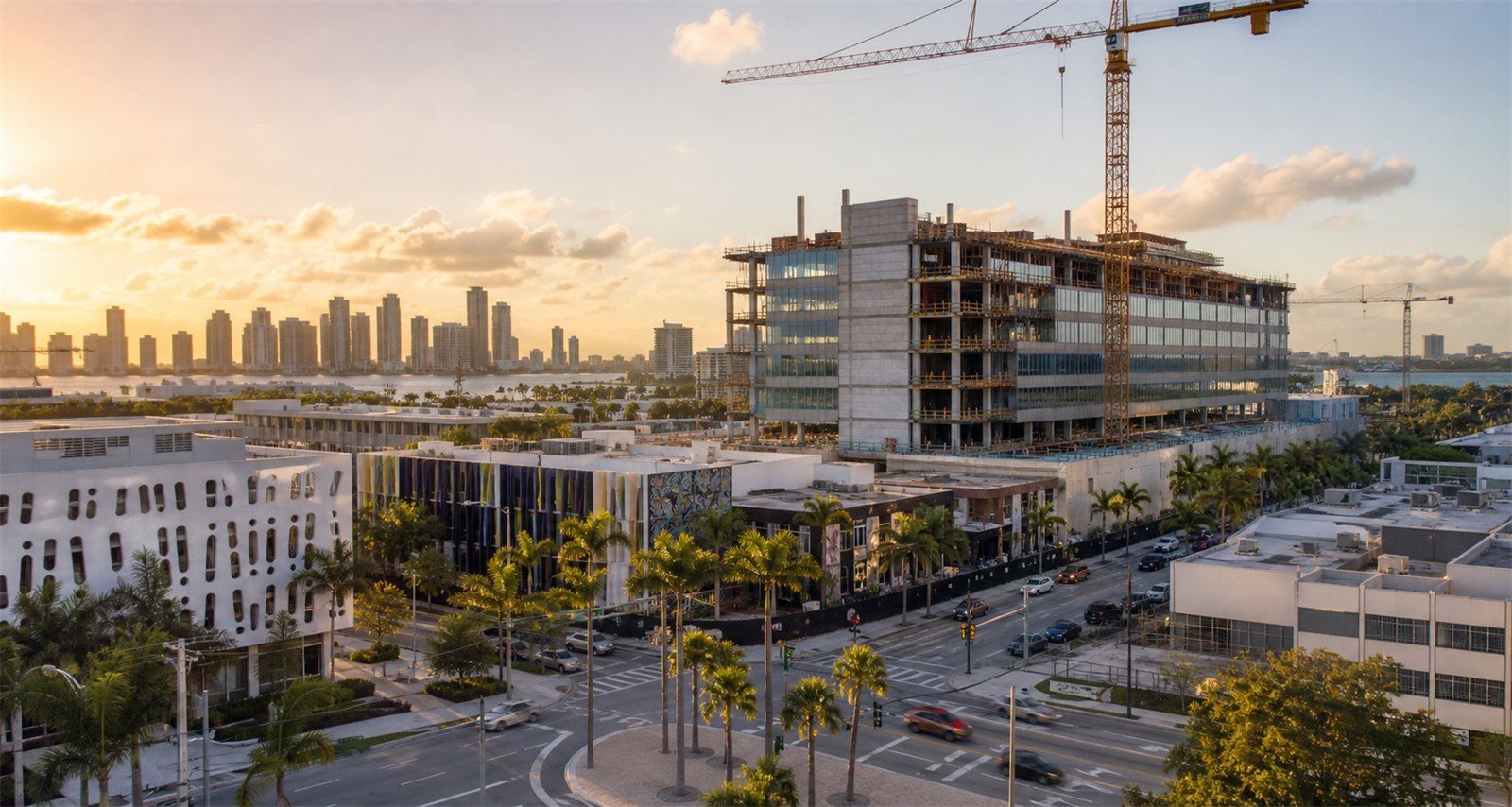
The most Miami-relevant news today is construction beginning on the Helen and Jacob Shaham Academic Medical Center at Florida International University's Modesto A. Maidique Campus. Florida YIMBY reported the start of work on the $158 million FIU-Baptist Health project on June 4. This is not just a campus story. Healthcare, education, research, and employment centers can reshape nearby housing demand over time, especially in neighborhoods around University Park, Sweetwater, Westchester, Fontainebleau, and Tamiami.
For owners nearby, that kind of institutional investment can support long-term neighborhood stability. For buyers, it is a reminder to look past the house itself and study the local employment anchors, commute routes, rental demand, and services around it. A home near a growing university and medical ecosystem can behave differently than a similar property in a purely residential pocket.
Why the FIU-Baptist project matters for nearby real estate
Medical and university projects tend to create layered demand. They can bring faculty, doctors, nurses, researchers, students, administrators, vendors, visiting families, and service workers into a trade area. Not everyone will buy immediately, but the pressure can show up in rentals, townhomes, smaller single-family homes, and eventually move-up demand.
That does not mean every nearby property automatically rises in value. The details still matter: parking, traffic, school zones, flood risk, property condition, insurance, and whether the block feels livable day to day. But when a large institution keeps investing in a location, buyers should pay attention. Miami real estate rewards people who understand where daily life is becoming more useful, not just where towers look good in a rendering.
The Design District is still attracting serious capital
The second signal comes from the Design District. PROFILEmiami reported on June 3 that MIRAI Design District secured an $85 million construction loan from Monroe Capital and broke ground on Kengo Kuma's first U.S. mixed-use development. The project is expected to bring boutique office, luxury retail, and hospitality space into one of Miami's most watched commercial neighborhoods.
For real estate, this matters because the Design District does not sit in isolation. Its momentum touches Buena Vista, Midtown, Edgewater, Wynwood, Little Haiti, and the broader Biscayne corridor. Even when a project is commercial, the residential impact can show up through walkability, restaurant demand, job access, lifestyle branding, and buyer willingness to pay for proximity.
This is also a useful reminder for sellers in nearby neighborhoods: buyers are not only comparing bedrooms and bathrooms. They are comparing daily convenience. A well-priced property near improving retail, dining, work, and cultural destinations can stand out, but only if the price still respects today's financing reality.
Rates dipped, but they are still shaping negotiations
Freddie Mac's Primary Mortgage Market Survey showed the 30-year fixed-rate mortgage averaging 6.48% on June 4, down from 6.53% the previous week. A lower print helps, but this is not the kind of rate move that suddenly erases affordability pressure in Miami.
At today's prices, a small rate change can still affect buyer psychology. Some buyers re-enter the conversation when rates ease. Others wait for more inventory, seller credits, or price reductions. The practical takeaway is straightforward: buyers should keep refreshing lender quotes, and sellers should understand that monthly payment math is still driving offer behavior.
If you are buying in Miami-Dade, this is the moment to compare the full monthly cost: principal, interest, taxes, insurance, HOA dues, reserves, assessments, flood coverage, parking, and likely maintenance. The buyer who understands the real monthly number is in a much better negotiating position than the buyer who only watches the headline rate.
Miami-Dade is still split between single-family and condo dynamics
The latest MIAMI REALTORS April 2026 report showed Miami-Dade total home sales rising year over year for the eighth consecutive month, but the day-to-day experience still depends heavily on property type. Single-family homes in strong neighborhoods can remain competitive when pricing is credible. Condos, especially older buildings with higher costs or reserve questions, often require deeper diligence and sharper negotiation.
That split is important for both sides of the table. Condo buyers should be asking about budgets, reserves, assessments, insurance, engineering reports, rental rules, financing eligibility, and building history. Sellers need to price against what buyers are actually underwriting, not what the neighbor hoped for last year.
For single-family buyers, the main challenge is different. A good home in a strong location can still move quickly if it is priced correctly. That makes preparation matter: proof of funds, lender clarity, insurance quotes, and clean inspection strategy can be the difference between winning and watching another buyer move first.
Broward is part of the Miami real estate conversation
Miami remains the center of this daily update, but Broward still matters because South Florida buyers do not live inside county lines. HousingWire recently reported that affordable and workforce housing construction has surged under Florida's Live Local Act, and Broward cities such as Hollywood have been part of that broader conversation.
For Miami residents, Broward supply is not some distant issue. It can affect commuter decisions, rental alternatives, investor math, and where priced-out buyers look next. If Miami-Dade remains expensive and Broward adds more workforce housing or apartment supply, the regional market can shift in small but meaningful ways.
What Miami buyers, sellers, and homeowners should watch now
Buyers should watch the triangle of rates, inventory, and property-specific carrying costs. A lower rate is helpful, but a building with high dues or upcoming assessments can erase the benefit quickly. A slightly higher rate on a better-managed property may be smarter than chasing the lowest sticker price.
Sellers should watch local competition, not national headlines. If you are selling near FIU, the Design District, Midtown, Edgewater, or another active corridor, the local story can help your positioning, but it does not replace disciplined pricing, clean presentation, and transparency around costs.
Homeowners should watch nearby institutional and commercial projects because they can change how your neighborhood is perceived. New medical, education, retail, and mixed-use investment can affect traffic, amenities, renter demand, and long-term buyer interest. The smartest owners keep an eye on those shifts before they need to make a decision.
The bottom line for June 4: Miami real estate is still attracting capital, but buyers are more selective. That is not a contradiction. It is the market we are in.
If you want a neighborhood-by-neighborhood read on Miami, Broward, or South Florida real estate, connect with William Gartin Real Estate with eXp Realty at 305-842-6097 or visit williamgartinrealestate.com.
Source notes: Florida YIMBY on the FIU-Baptist Health academic medical center construction start; PROFILEmiami on MIRAI Design District financing and groundbreaking; Freddie Mac PMMS for June 4, 2026 mortgage rates; MIAMI REALTORS April 2026 Miami-Dade market report; and HousingWire coverage of South Florida Live Local Act housing construction.
Categories
Recent Posts