Miami Closet Upgrades That Fight Humidity, Protect Clothes, and Make Mornings Easier
In South Florida, a closet is not just a place to hang clothes. It is a small room that has to deal with heat, humidity, air conditioning cycles, wet shoes, beach towels, rain jackets, leather bags, delicate fabrics, and daily clutter. For Miami homeowners, that means a poorly planned closet can quickly become musty, crowded, and frustrating.
The good news is that closet upgrades do not have to mean a full luxury renovation. A few smart changes can help protect clothing, improve airflow, reduce moisture problems, and make everyday routines feel smoother. Whether you own a condo, a townhouse, or a single-family home in Miami-Dade or Broward, your closets can play a bigger role in comfort, organization, and long-term property care than many homeowners realize.
This is especially relevant on June 4, 2026, as South Florida moves into rainy-season living and the official Atlantic hurricane season, which runs from June 1 through November 30. Even in a quieter forecast year, one heavy rain stretch, roof leak, plumbing issue, or air-conditioning problem can create the kind of moisture that damages belongings and home materials.
Why Closets Need Special Attention in South Florida
Closets often have less air movement than bedrooms, hallways, and living areas. Many have solid doors, tightly packed shelving, no dedicated vent, and items stored directly against walls. That may work in a drier climate, but in Miami and South Florida homes, trapped humidity can make clothing smell stale and can create conditions where mold and mildew are more likely to appear.
The EPA and CDC both point to the same basic principle: controlling moisture is the key to controlling mold. That matters in closets because clothes, cardboard boxes, leather goods, shoes, luggage, paper documents, handbags, and wood shelving can all hold or collect moisture. If a closet smells musty, feels damp, or has condensation nearby, treat it as a home-maintenance signal rather than just a housekeeping issue.
1. Start With Airflow Before Buying More Organizers
Many homeowners start a closet project by buying bins, baskets, shelves, or matching hangers. Those can help, but airflow should come first. If air cannot circulate, a beautifully organized closet can still feel stale.
Simple airflow upgrades can include:
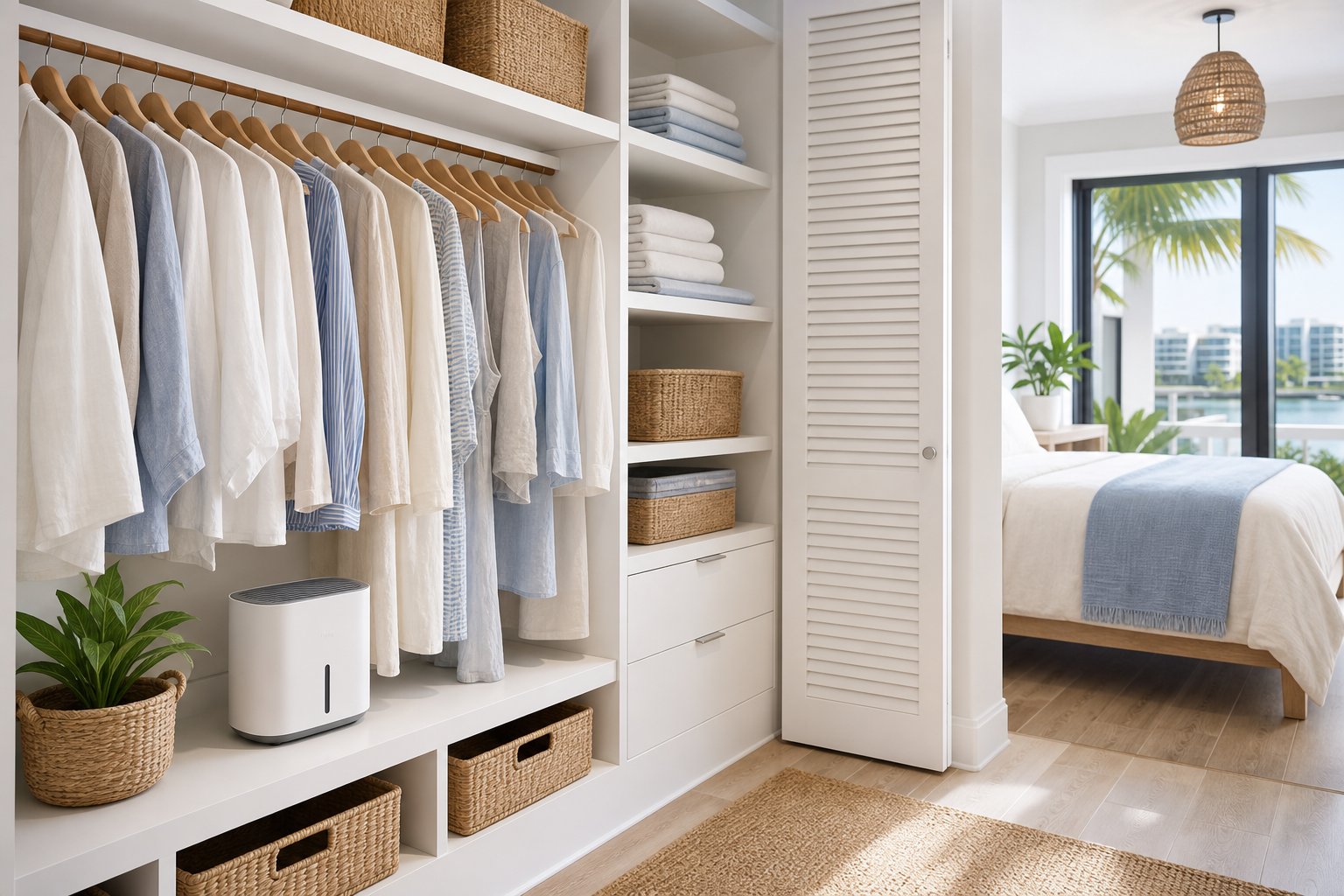
- Replacing a solid closet door with a louvered or partially ventilated door where appropriate.
- Leaving a small gap between stored items and exterior walls.
- Avoiding tightly packed clothing that blocks air movement between garments.
- Using open shelving instead of sealed plastic bins for items that need to breathe.
- Keeping return-air pathways clear so the home cooling system can work properly.
For homes in coastal or suburban areas with larger closets, such as Palmetto Bay, Pinecrest, and Coral Gables, airflow can be especially important in walk-in closets attached to primary suites. A larger closet can still trap moisture if the layout is sealed off from moving air.
2. Use a Hygrometer So You Are Not Guessing
A small humidity meter, often called a hygrometer, is one of the simplest tools a South Florida homeowner can add to a closet. It helps you see whether the space is staying dry enough or creeping into a higher-humidity range. The EPA recommends keeping indoor humidity below 60 percent when possible, with an ideal range between 30 and 50 percent. The CDC recommends keeping home humidity no higher than 50 percent all day long when trying to prevent mold growth.
You do not need an expensive device. A compact digital meter can sit on a closet shelf and give you a quick reading. If the closet repeatedly reads high compared with the rest of the home, that is a clue to look at airflow, overpacked storage, damp items, nearby plumbing, HVAC performance, or whether the closet shares a wall with a bathroom, laundry area, garage, or exterior exposure.
3. Choose Storage Materials That Work With Humidity
Not every storage product is a good match for Miami homes. Cardboard boxes are inexpensive, but they can absorb moisture and odors. Completely sealed plastic bins can protect some items, but they can also trap dampness if anything goes in even slightly wet.
Better closet choices often include:
- Woven baskets for breathable everyday storage.
- Fabric bins with structure for scarves, hats, and accessories.
- Clear bins with small ventilation openings for items that need visibility.
- Wood, metal, or moisture-resistant shelving rather than flimsy particleboard in problem areas.
- Cedar blocks or sachets for scent and insect resistance, used as a supplement rather than a moisture solution.
For valuable items such as leather handbags, formal shoes, suits, keepsake clothing, and important documents, avoid storing them on the floor or against exterior walls. Put the most moisture-sensitive items where air moves best and where you can inspect them easily.
4. Create a Wet-Weather Drop Zone Outside the Closet
One of the easiest ways to protect a closet is to stop damp items before they get inside it. Miami homeowners often deal with sudden rain, humid beach days, pool towels, kids' sports gear, and shoes that pick up moisture from patios or driveways. If those items go straight into a closet, they bring humidity with them.
Set up a small drop zone near the entry, laundry room, mudroom, or garage area with hooks, a washable mat, and a basket for items that need to dry first. This is useful in single-family homes in areas like Cutler Bay, Kendall, and Doral, where families often move between cars, yards, patios, school activities, and outdoor living spaces throughout the day.
Let umbrellas, rain jackets, beach bags, and sneakers dry before storing them. This small habit can make a major difference in how fresh a closet smells.
5. Do Not Ignore the Bathroom-Closet Connection
Many South Florida primary bedrooms connect the bathroom and closet closely. That layout is convenient, but it can create moisture challenges if shower steam moves directly into clothing storage. ENERGY STAR notes that adequate ventilation helps control moisture and remove odors, and the EPA recommends using exhaust fans or windows when showering, cooking, or dishwashing.
If your closet is near a bathroom, pay attention to:
- Whether the bathroom fan actually vents outside.
- How long the fan runs after hot showers.
- Whether the closet door stays closed while the bathroom is steamy.
- Whether towels are drying completely before they are stored.
- Any recurring musty smell near shared walls or corners.
A quiet, properly sized ventilation fan can be a practical upgrade that improves comfort without changing the entire bathroom. For homeowners thinking about resale, buyers may not ask about exhaust fan specifications, but they do notice fresh-smelling bathrooms, clean closets, and homes that feel well maintained.
6. Upgrade Lighting So You Can Spot Problems Early
Good closet lighting is not only about style. It also helps you see water stains, mildew spots, pest issues, dust buildup, and clutter before they become bigger problems. Bright, even lighting makes the closet feel more finished and helps you use the space more effectively.
Consider LED strip lighting under shelves, a low-profile ceiling fixture, or motion-sensor lighting for smaller reach-in closets. Choose fixtures rated for the location and have electrical work done professionally when needed. A clean, well-lit closet can make an older home feel more modern and can make daily routines easier.
7. Give Shoes and Bags Their Own Breathing Room
Shoes and bags are often the main source of closet odor. They collect moisture, dirt, sweat, and outdoor air, then sit in tight spaces with little circulation. Instead of storing shoes in piles on the floor, use open shoe shelves, slanted racks, or cubbies that allow air to move.
For leather goods, avoid overcrowding and keep items away from damp walls or floors. Use dust bags that breathe, not airtight plastic. If you live near the water or are shopping for waterfront homes, moisture awareness becomes even more important because salt air, humidity, and frequent indoor-outdoor living can be harder on materials.
8. Build a Simple Monthly Closet Check
Closet maintenance does not need to be complicated. Once a month, take five minutes to check for:
- Musty odor when the door opens.
- Humidity readings that are higher than the rest of the home.
- Water stains near ceilings, baseboards, or shared bathroom walls.
- Condensation on nearby vents, walls, or pipes.
- Clothing, shoes, or bags that feel damp.
- Items stored too tightly against walls or on the floor.
If you find visible mold, recurring moisture, or a smell that returns after cleaning, do not just cover it with fragrance. The underlying moisture source needs to be corrected. That may mean checking for leaks, improving ventilation, servicing the air-conditioning system, using a dehumidifier, or calling a qualified professional for larger or persistent problems.
9. Think of Closet Upgrades as Both Lifestyle and Property Care
A better closet makes mornings easier, protects the things you own, and helps the home feel more polished. It can also support property value because storage is one of the features buyers notice quickly. People touring a home may not mention closet humidity directly, but they absolutely notice odors, crowded storage, damaged shelving, poor lighting, and signs that a home has not been maintained.
In competitive South Florida real estate markets, the homes that feel clean, dry, organized, and easy to live in often make a stronger impression. That is true whether the property is a luxury home, a family home, a condo, or a future investment. Small upgrades can create a daily quality-of-life improvement now while helping the property show better later.
Final Takeaway for Miami Homeowners
Your closet may be one of the smallest spaces in your home, but in South Florida it deserves real attention. Better airflow, smarter storage materials, humidity monitoring, bathroom ventilation, good lighting, and simple monthly checks can help protect clothing, reduce musty odors, and make your home feel more comfortable.
If you are thinking about buying, selling, improving, or simply understanding the value of your home, William Gartin with eXp Realty can help you look at your property with both lifestyle and resale value in mind. From storage and maintenance details to neighborhood trends across Miami and South Florida, William helps homeowners make smart decisions for today and the future.
William Gartin with eXp Realty
305-842-6097
williamgartinrealestate.com
Categories
Recent Posts