Florida's Live Local Act 4.0 Takes Effect July 1: What Miami Buyers, Sellers, and Homeowners Need to Know

Florida's Live Local Act 4.0 Takes Effect July 1: What Miami Buyers, Sellers, and Homeowners Need to Know
On July 1, 2026, the latest round of amendments to Florida's Live Local Act officially takes effect — and for anyone buying, selling, owning, or investing in Miami-Dade or Broward County real estate, the changes matter more than most headlines suggest. House Bill 1389, approved by the Florida Legislature on March 13, 2026, with near-unanimous support (98-4 in the House, 35-0 in the Senate), represents the fourth consecutive year of aggressive state-level housing policy aimed at expanding affordable and workforce housing across Florida.
Miami-Dade County sits at the center of this transformation. According to data published by the Florida Housing Coalition as of March 9, 2026, there are approximately 55,000 units across 182 proposed Live Local Act projects statewide, with 6,316 units already under construction across 14 projects. Miami-Dade leads all 67 Florida counties in proposed Live Local projects, followed by Hillsborough, Broward, Palm Beach, and Orange counties.
For the South Florida real estate market, this is not a distant policy debate. It is reshaping where housing gets built, what types of projects qualify for tax incentives, and how neighborhoods from Allapattah to Homestead are changing in real time.
What Is the Live Local Act and Why Does It Matter for Miami Real Estate?
The Live Local Act was originally signed into law in 2023 to address Florida's deepening affordable housing crisis. The core mechanism is straightforward: the state preempts local zoning rules for qualifying affordable and workforce housing developments, meaning cities and counties cannot block projects that meet the law's criteria simply because local zoning does not allow residential construction on that particular parcel.
The law also provides significant tax incentives. Projects receive a 75% property tax exemption on units rented to households earning up to 120% of the area median income (AMI), and a 100% exemption for units serving households at or below 80% AMI. Reduced parking requirements and limits on local government control over the zoning process further streamline development.
The result has been a wave of new housing proposals across South Florida, particularly in neighborhoods that were previously zoned exclusively for commercial or industrial use.
What Changes Under HB 1389 — The 2026 Amendments
The 2026 amendments, analyzed in detail by law firms Bilzin Sumberg and Carlton Fields, expand the Live Local Act in several significant ways that directly affect the Miami market.
Religious Institutions and Public Land Now Eligible
HB 1389 extends Live Local Act zoning preemptions to properties larger than three acres that have been owned by religious institutions and home to a house of worship for at least 10 years. The house of worship must be a co-applicant and continue operating after construction. The law also now applies to land owned by cities, counties, and school districts, regardless of the underlying zoning. In a county like Miami-Dade, where developable land is increasingly scarce and expensive, opening church-owned and government-owned parcels to workforce housing development is a meaningful expansion of the available pipeline.
Setbacks and Stepbacks Cannot Limit Building Height
One of the most contested issues since the original law passed has been local governments using dimensional requirements — setbacks, stepbacks, and buffer zones — to effectively reduce the allowable building height for Live Local projects. HB 1389 closes this loophole explicitly. Local governments may not restrict the height of a qualifying project through other dimensional means or impose setbacks more restrictive than the minimum already permitted in the proposed development area. For Miami developers, this removes a significant source of uncertainty and delay.
Fair Housing Protections for Affordable Housing
In a provision that legal analysts have called one of the most important in the bill, HB 1389 adds all affordable housing — including Live Local Act projects — to the protections of the Florida Fair Housing Act. This means local governments cannot discriminate against a development in land use decisions or permitting based on its financing source or because the project is designated as affordable housing. The law also waives sovereign immunity for governmental entities that violate these protections, creating a real enforcement mechanism.
Assemblages Across Public Access Points
The amendments clarify that a Live Local proposal may include an assemblage of parcels under common ownership separated by up to 15 feet of land limited to public pedestrian access. This is particularly relevant in waterfront and beachfront areas of Miami-Dade and Broward counties, where pedestrian access corridors to beaches and waterfronts frequently divide parcels. This provision sunsets on July 1, 2030.
Tax Exemption Vesting and Opt-Out Protections
Vesting for the tax exemption now occurs at the building permit stage. Even if a local government later opts out of the exemption program, property owners who received a building permit on or after July 1, 2026, and within four years before the opt-out's effective date may still apply for and receive the exemption. To opt out, a taxing authority must demonstrate three consecutive years of affordable housing surplus for units available to renter households at 0-120% AMI.
How This Is Already Changing Miami Neighborhoods
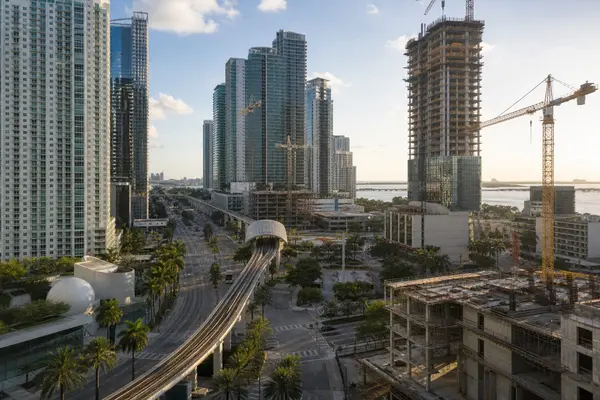
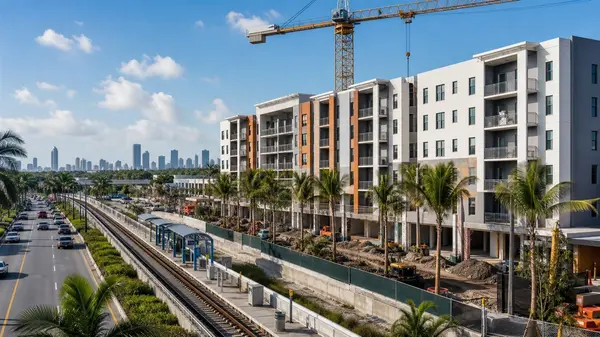
The Live Local Act is not a future concept in Miami-Dade County — construction is already underway on several landmark projects.
In February 2026, Miami-Dade officials broke ground on Dulce Vida in Allapattah, an $85 million mixed-income development by Coral Rock Development Group at 1785 NW 35th Street. The project includes 230 rental units — 92 reserved for households at 60% AMI, 78 at 100% AMI, and 60 at 120% AMI — plus an 8,500-square-foot public library at ground level. Financing includes a $54 million construction loan from Citibank and $15 million from the City of Miami's Miami Forever Affordable Housing Bond. Dulce Vida is among the first projects in the city to move into construction under the Live Local Act.
Beacon Hill at Princeton, located at 23815 S. Dixie Highway in the Homestead area, is the first 100% workforce housing project in Miami-Dade County launched under the Live Local Act. The 112-unit development — 41 one-bedroom and 71 two-bedroom apartments — designates all units for households earning no more than 120% of AMI, exceeding the law's minimum workforce unit requirement. The project is slated for completion by the end of 2026.
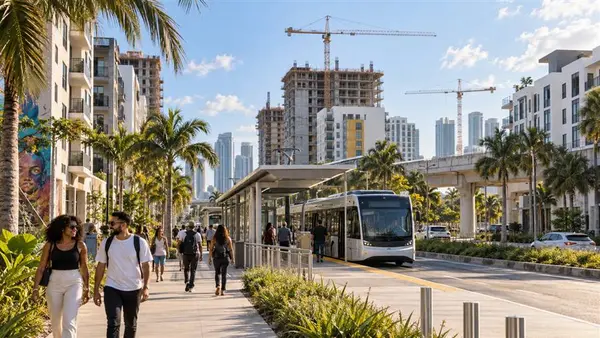
Larger-scale proposals are also advancing. In West Little River, developers have proposed The HueHub, a multi-tower development planned to include over 4,000 residential units. Emerging neighborhoods like Allapattah, Little River, and West Miami are seeing the highest concentration of workforce housing projects, many of them near Metrorail and Brightline corridors.
Why This Matters: Miami's Affordability Crisis by the Numbers
The urgency behind the Live Local Act is driven by hard numbers. The average rent in Miami hovers around $3,150 per month, with rental costs up more than 50% over the last decade. Nearly 50% of Miami households are now considered rent-burdened, spending more than 30% of their gross income on housing. For essential workers, the picture is even more difficult: a one-bedroom apartment averaging $2,554 per month would consume more than 60% of a teacher's salary and roughly 50% of a police officer's or firefighter's pay.
Miami was ranked the least affordable city for renters in the United States in a recent WalletHub report. The Live Local Act represents the state's most aggressive attempt to change those numbers by removing regulatory barriers and incentivizing private-sector construction of workforce housing.
What Miami Home Buyers Should Know
For buyers, the Live Local Act creates both opportunity and something to watch carefully. As workforce housing projects come online in neighborhoods like Allapattah, Little River, Homestead, and areas near transit corridors, new rental supply may help moderate rent growth in surrounding areas, which can indirectly affect home prices and the rent-versus-buy calculation.
Buyers should also pay attention to how new Live Local projects may change the character and density of neighborhoods they are considering. A commercially zoned block that has been quiet for years could become the site of a mid-rise residential building under the law's zoning preemptions. This is not necessarily negative — many of these projects bring new amenities, retail, and foot traffic — but it is a factor to evaluate.
First-time buyers who have been priced out of traditional Miami neighborhoods may find more attainable options in areas where workforce housing is expanding the housing stock. Working with a local agent who understands which projects are in the pipeline and how they affect surrounding property values is essential.
What Miami Home Sellers Should Know
Sellers in neighborhoods where Live Local Act projects are under construction or proposed should be aware of how new supply may affect their pricing strategy. In some cases, the arrival of a well-designed workforce housing project can enhance a neighborhood's appeal by adding residents, retail, and investment. In other cases, sellers of existing condos or homes near a large new development may face competition from renters who now have access to newer, more affordable options.
Sellers of commercial or industrial properties in Miami-Dade and Broward should recognize that their land may now be worth more to developers who can build residential projects under the Live Local Act. Properties near transit, in mixed-use corridors, or in neighborhoods with strong rental demand may attract developer interest they would not have received before the law existed.
Pricing accurately and understanding how the local pipeline of new projects affects buyer demand in your specific neighborhood is more important than ever. A local real estate professional who follows development approvals, building permits, and construction timelines can help sellers position their property effectively.
What Miami Homeowners Should Know
Current homeowners should understand that the Live Local Act does not apply to existing single-family homes or owner-occupied properties. It targets new construction on commercially, industrially, or institutionally zoned land — or now, on qualifying government-owned or religious institution-owned parcels.
However, the law can affect homeowners indirectly. New workforce housing construction in your area may increase density, bring infrastructure improvements, or add retail and services that boost neighborhood desirability. On the other hand, rapid development without adequate infrastructure investment can strain roads, schools, and parking.
Homeowners should also note that the 2026 legislative session did not produce any changes to the homestead exemption or property tax structure. HJR 203, which proposed gradually eliminating non-school property taxes on homesteaded properties, passed the House 80-30 but died in the Senate Appropriations Committee when the regular session ended on March 13, 2026. Your homestead exemption, Save Our Homes cap, and portability benefits remain unchanged.
For homeowners considering selling in the next one to three years, understanding the local development pipeline is valuable. New workforce housing can be a signal that a neighborhood is attracting investment and attention — which often precedes broader property value appreciation.
Looking Ahead: What Happens After July 1
Once HB 1389 takes effect on July 1, 2026, expect an acceleration of Live Local Act project filings across Miami-Dade and Broward counties. The expansion to religious institution and government-owned land opens new sites that were previously unavailable. The closing of the setback loophole removes a tool that some municipalities had used to limit project scale. And the Fair Housing Act protections create real legal consequences for local governments that try to block qualifying projects.
Miami-Dade County's zoning department issued an updated Live Local Act memorandum on March 25, 2026, consolidating and superseding prior guidance to provide unified implementation rules. Developers, property owners, and land use attorneys across South Florida are already preparing applications to take advantage of the expanded provisions.
The Live Local Act is not a silver bullet for Miami's affordability crisis. But it is the most consequential housing policy Florida has enacted in a generation, and its effects are becoming visible on the ground — from Allapattah to Homestead, from Little River to West Miami. For anyone involved in the Miami real estate market, understanding what this law does and where it is creating change is no longer optional.
Sources
- Bilzin Sumberg — "Florida Passes House Bill 1389 Updating Live Local Act and More Housing Affordability Measures" — Published March 13, 2026 — Link — Used for detailed HB 1389 bill analysis, provisions, and statewide project data from Florida Housing Coalition.
- Urbanize Miami — "Florida's Live Local Act Enters New Phase With 2026 Amendments" — Published March 2026 — Link — Used for context on state-local government dynamics and development impact.
- WLRN — "New development breaks ground in Allapattah as Miami advances first Live Local Act housing projects" — Published February 13, 2026 — Link — Used for Dulce Vida project details and groundbreaking information.
- CRE Daily — "Workforce Housing Launches in Miami-Dade" — Published 2026 — Link — Used for Beacon Hill at Princeton project details.
- Bisnow South Florida — "Miami-Dade's First All-Workforce Housing Project Set To Break Ground" — Published 2025 — Link — Used for Beacon Hill at Princeton unit count and AMI details.
- WLRN — "Firefighters, teachers and police officers protect the city of Miami, but cannot afford to live there" — Published January 26, 2026 — Link — Used for essential worker housing affordability data.
- CBS Miami — "Miami ranked least affordable city for renters in new study" — Published 2026 — Link — Used for WalletHub ranking and rent burden statistics.
- Barnes Walker — "Florida Property Tax Update: What Actually Happened in the 2026 Legislative Session" — Published 2026 — Link — Used for HJR 203 property tax proposal status.
- Florida Realtors — "2026 Legislative Final Report" — Published 2026 — Link — Used for legislative session overview and Florida Realtors advocacy results.
- Miami-Dade County — "2026 Live Local Memorandum" — Published March 25, 2026 — Link — Used for county-level implementation guidance.
Need Local Miami Real Estate Guidance?
Whether you are buying your first home, selling a property, investing in the rental market, or simply trying to understand how Florida's housing policies affect your neighborhood, having a local real estate professional who follows these changes closely makes a real difference.
Contact William Gartin with eXp Realty for local guidance, property updates, and real estate advice based on today's Miami market.
Phone: 305-842-6097
Website: williamgartinrealestate.com
Serving buyers, sellers, and homeowners across Miami, Miami-Dade County, Broward County, and South Florida.
Categories
Recent Posts