Miami Window Treatment Ideas That Keep Your Home Cooler, Brighter, and More Private
Miami sunshine is one of the best parts of living in South Florida, but inside the home it can be a little complicated. The same natural light that makes a living room feel cheerful in the morning can create glare by lunch, heat up bedrooms in the afternoon, fade furniture over time, and make privacy harder in homes with large windows or close neighbors.
That is why window treatments are more than a finishing touch. For Miami homeowners, the right shades, curtains, blinds, or layered window coverings can improve comfort, support energy efficiency, soften the look of a room, and make a home feel more private without closing it off from the light. They can also help a property feel more polished when it is time to sell, because buyers notice homes that feel cool, bright, and thoughtfully finished.
If your rooms feel too hot, too exposed, or too harsh during the day, your windows may be doing more work than you realize. Here are practical window treatment ideas for South Florida homes that balance style, privacy, comfort, and long-term home value.
Start With the Direction Your Windows Face
Before choosing fabrics or colors, pay attention to how sunlight moves through your home. In Miami, east-facing rooms often get bright morning light, west-facing rooms can become hot and intense later in the day, and south-facing spaces may need more consistent light control. A window treatment that works beautifully in one room may not be enough for another.
Walk through your home at three times of day: morning, mid-afternoon, and early evening. Notice where the glare is strongest, which rooms feel warmer, and where privacy becomes an issue after dark. This simple exercise helps you choose solutions that solve the real problem instead of buying the same treatment for every window.
For example, a front living room may need privacy from the street while still allowing daylight. A primary bedroom may need blackout control for better sleep. A family room with large sliding glass doors may need heat and glare control without blocking a pool or garden view. Homes in sunny neighborhoods such as Pinecrest, Palmetto Bay, and Coral Gables often benefit from a room-by-room approach instead of a one-size-fits-all plan.
Use Solar Shades Where Heat and Glare Are the Main Problem
Solar shades are one of the most useful options for South Florida homes because they are designed to reduce glare and filter sunlight while preserving some outdoor visibility. They work especially well in rooms with large windows, sliding doors, water views, or open exposure.
The key detail is openness factor. A lower openness factor blocks more light and offers more privacy, while a higher openness factor preserves more view. In simple terms, tighter weave means more protection; looser weave means more visibility. Many Miami homeowners choose solar shades for living rooms, breakfast areas, offices, and waterfront-facing rooms because they make the space easier to use during bright parts of the day.
Solar shades can look clean and modern, which is helpful if you want a home to feel updated without heavy decor. They are also a strong choice for waterfront homes where the goal is to enjoy the view while controlling afternoon glare.
Layer Curtains Over Shades for a Softer, More Finished Room
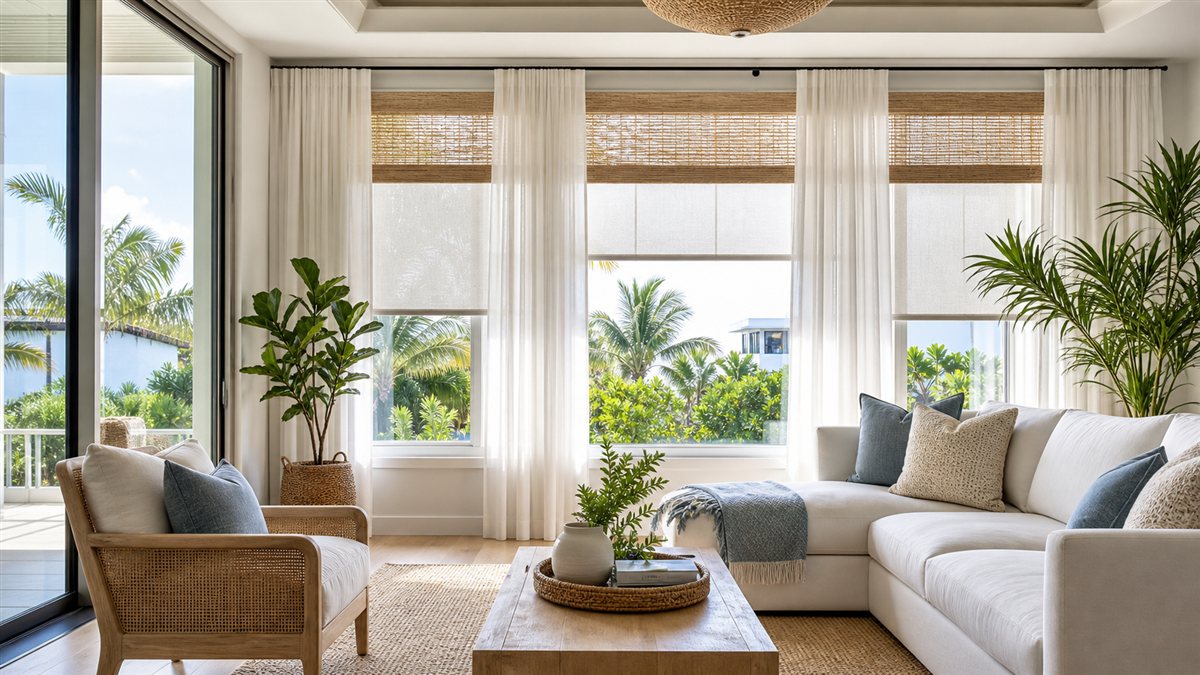
Layering is where function and design come together. A shade can handle privacy and sun control, while curtains add softness, texture, color, and a more finished look. This is a common designer move because it makes rooms feel more intentional without requiring a major renovation.
In Miami homes, lightweight linen-look curtains, performance fabrics, and washable blends often make more sense than heavy drapes. They create movement and softness without making the room feel stuffy. Hang curtain rods higher and wider than the window frame when possible. This makes windows appear larger and lets panels stack outside the glass so you do not block natural light when the curtains are open.
A good layered setup might look like this:
- Solar shades plus simple white or oatmeal linen panels in a living room
- Woven wood shades plus lined curtains in a bedroom
- Roman shades plus side panels in a dining room
- Motorized roller shades plus decorative panels for large sliding doors
Layering also gives a home a more custom feel, which can help with perceived value. Buyers may not know the brand of the shade, but they often notice when a room feels balanced, comfortable, and complete.
Choose Blackout or Room-Darkening Treatments for Better Sleep
Bedrooms need a different strategy from common areas. In South Florida, early sunrise, streetlights, landscape lighting, and nearby homes can make bedrooms brighter than many people prefer. Blackout or room-darkening treatments can make a noticeable difference in sleep quality, especially in primary bedrooms, nurseries, guest rooms, and shift-worker households.
Blackout does not have to mean dark, heavy, or outdated. Many modern options look tailored and clean. You can use blackout-lined curtains, cellular shades, roller shades, or layered combinations. If you want a softer look, pair a room-darkening shade with decorative curtains so the window still feels designed during the day.
This is one of those upgrades that improves daily quality of life immediately. A calmer, darker bedroom can make the whole home feel more restful, which is exactly the kind of lifestyle benefit homeowners remember after living with the change for a few weeks.
Use Woven Shades for Texture, Warmth, and Coastal Style
Woven wood and natural-fiber shades are popular in South Florida because they add texture without making a room feel dark. They work well with coastal, tropical, transitional, and organic-modern interiors. In a white or neutral room, woven shades can keep the space from feeling flat.
The practical detail is lining. Unlined woven shades can be beautiful, but they may not provide enough privacy at night. If the window faces a street, neighbor, or common area, consider privacy lining or pair the woven shade with curtain panels. In bedrooms, a blackout lining may be worth the upgrade.
Woven shades can be especially attractive in homes where you want a relaxed but elevated feel, such as single-family houses in Cutler Bay, townhomes in Doral, or larger family homes in Kendall.
Think About Privacy Differently During the Day and Night
Many homeowners choose window treatments based on how they look during the day, then realize the room feels exposed at night. Privacy changes when interior lights are on. A sheer curtain that feels private in daylight may reveal more than expected after sunset.
If privacy is a concern, test each room at night from outside if possible. Look at front-facing windows, side yards, bathrooms, bedrooms, and rooms near shared fences. You may find that some windows only need a simple privacy liner, while others need top-down bottom-up shades, frosted film, shutters, or layered treatments.
Top-down bottom-up shades are especially useful because they let light enter from the top while covering the lower part of the window. That makes them practical for bathrooms, street-facing bedrooms, and home offices where privacy matters but natural light is still welcome.
Consider Motorized Shades for Large or Hard-to-Reach Windows
Motorized shades can feel like a luxury, but in the right home they are also practical. Large sliders, tall windows, two-story spaces, and west-facing glass can be difficult to manage manually. If shades are hard to reach, people usually stop using them. Automation solves that problem.
Motorized shades can be scheduled to lower during the hottest part of the day, raise in the morning, or close for privacy at night. This can support comfort and may help reduce the load on cooling systems during peak sun exposure. For homeowners considering smart home upgrades, motorized window treatments are one of the more visible improvements because you experience them every day.
They can also be appealing in luxury homes, new construction properties, and modern condos where clean lines and convenience matter to buyers.
Pick Materials That Can Handle Humidity and Daily Use
South Florida humidity should influence your choices. Bathrooms, laundry rooms, kitchens, and rooms near pool areas need materials that can handle moisture and frequent use. Real wood blinds may not be the best fit in humid spaces, while faux wood, vinyl, aluminum, performance fabrics, and certain roller shades can be easier to maintain.
Also think about cleaning. Dust, pollen, salt air near the coast, pet hair, and everyday humidity can build up. Smooth roller shades, washable curtain panels, and wipeable blinds are usually easier to maintain than delicate fabrics with heavy texture. If you have children, pets, or rental-style turnover needs, durability matters as much as style.
Use Window Treatments to Make Rooms Feel More Expensive
Some home upgrades are loud. Window treatments are quiet. But when they are done well, they can make a room feel noticeably more expensive.
For a higher-end look, focus on these details:
- Hang curtains close to the ceiling instead of directly above the window frame
- Extend rods wider than the window so panels do not block glass when open
- Choose consistent hardware finishes throughout connected spaces
- Use full-length panels that just kiss the floor or break slightly
- Avoid flimsy mini blinds in main living areas when a more tailored option is possible
- Repeat similar treatments across open-concept rooms for visual continuity
These small design decisions can make older homes feel more current and new homes feel more complete. They also photograph well, which matters if you ever list the property for sale.
Balance Comfort, Style, and Resale Value
Not every window needs the most expensive solution. The smartest approach is to spend where the difference is most noticeable. Prioritize bedrooms, west-facing rooms, street-facing windows, large sliders, and main living areas. Secondary rooms can often use simpler treatments as long as they are clean, functional, and consistent with the rest of the home.
For Miami homeowners, window treatments sit at the intersection of lifestyle and property value. They help with heat, glare, privacy, sleep, design, and the way a home feels during everyday life. They can also make a strong impression on buyers because they suggest the home has been thoughtfully cared for.
If your home feels too bright, too hot, or not quite finished, start with the windows. A better shade, a layered curtain, or a privacy solution can change the whole mood of a room without knocking down a wall or starting a major renovation.
Thinking About Improvements Before You Sell?
If you are thinking about buying, selling, improving, or understanding the value of your home in Miami or South Florida, connect with William Gartin with eXp Realty. William helps homeowners think through which upgrades are worth doing, which improvements support daily quality of life, and how design, condition, neighborhood, and property value come together in the South Florida real estate market.
William Gartin with eXp Realty
305-842-6097
williamgartinrealestate.com
Categories
Recent Posts