Miami Real Estate News for July 20, 2026: Sales Strength, Sunset Place and Brickell Demand
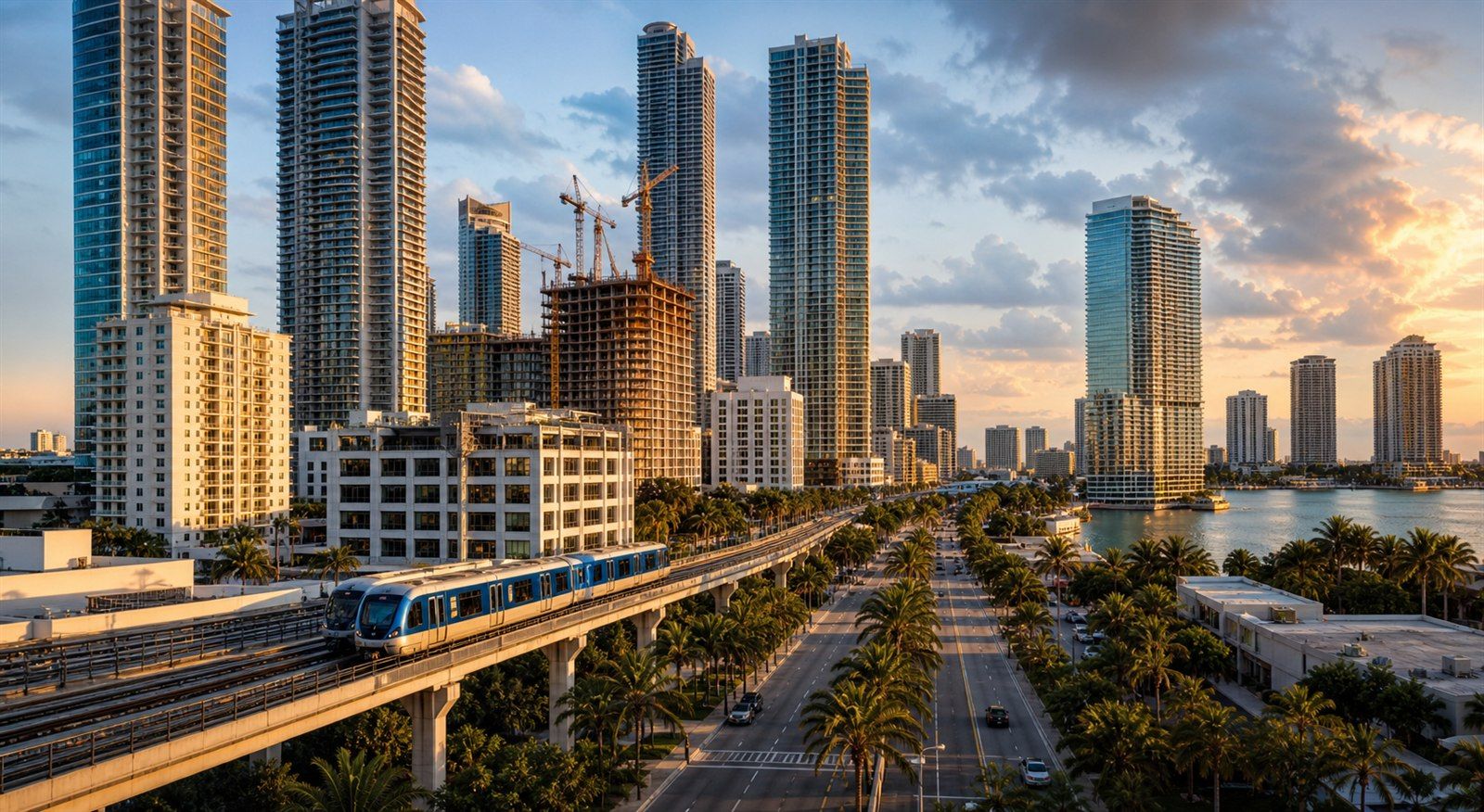
Miami real estate news for Monday, July 20, 2026 is about momentum, patience and daily-life math. Miami-Dade posted one of its strongest June sales readings in years, South Miami's long-awaited Sunset Place redevelopment is still moving through infrastructure financing, Brickell's luxury market picked up another global-buyer signal, and downtown drivers have another week of I-395, S.R. 836 and I-95 construction impacts to plan around.
That mix is very Miami. A buyer can be watching mortgage rates, a seller can be watching days on market, a homeowner can be watching traffic and construction, and an investor can be watching which neighborhoods still attract capital. The useful takeaway is not that every part of the market is hot or slow. It is that Miami is moving in layers.
Miami-Dade's June Sales Report Shows More Activity, But Buyers Are Still Selective
MIAMI REALTORS + RWorld reported on July 17 that Miami-Dade total home sales rose 14.3% year over year in June 2026 to 2,107 transactions, the county's best June since 2023. Single-family transactions rose 16.8%, existing condo sales rose 11.9%, and $1 million-plus sales climbed 29.1%.
For sellers, that is a good sign. Demand has not disappeared, especially for well-positioned homes and higher-end product. But the same report also shows why pricing still matters: Miami-Dade single-family homes took a median 52 days to contract, up from 42 days a year earlier, and condos took 85 days to contract, up from 68 days.
The market is active, but it is not careless. Buyers are comparing monthly payment, insurance, association costs, building condition, flood exposure, commute and neighborhood fit. A good listing strategy in Miami right now needs sharp pricing, strong presentation and a clear explanation of the real monthly ownership picture.
Sunset Place Is Still Waiting on the Infrastructure Piece
The Miami Herald reported July 17 that demolition of The Shops at Sunset Place in downtown South Miami has not started, even though earlier expectations pointed to a 2026 start. Midtown Development's plan is still alive, but the timing depends heavily on public infrastructure financing and approvals.
The key issue is not only the mall site. South Miami is waiting on Miami-Dade County Commission action tied to a special taxing district and community redevelopment agency that would help fund roughly $150 million in infrastructure improvements. Those improvements include water, sewer, pump-station capacity, landscaping, sidewalks and street-grid work needed to make the replacement feel more like an urban neighborhood than an enclosed mall.
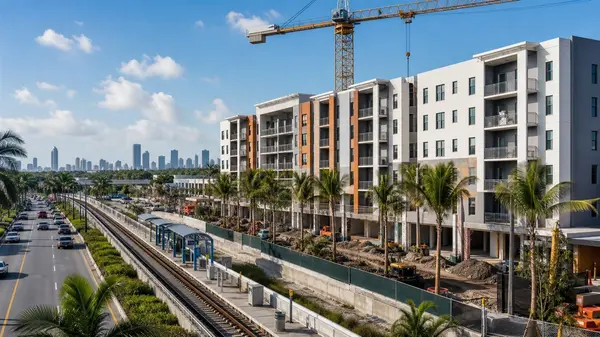
For nearby homeowners and buyers, this matters because downtown South Miami is one of the most important transit-adjacent redevelopment stories along the U.S. 1 corridor. The approved plan envisions seven towers, about 1,500 residential units, a hotel, movie theaters and 150,000 square feet of shops and restaurants across the 10-acre property. If it moves forward, it could reshape how people think about living near South Miami, Coral Gables, Pinecrest, Coconut Grove and the Metrorail line.
The practical advice: watch the county vote expected in September, not just the demolition date. In redevelopment, the quiet infrastructure agreements often tell you more than the renderings.
Brickell Luxury Still Has Global Pull
Miami Living Magazine reported that Cipriani Residences Miami crossed the 80% sold threshold ahead of its expected summer 2027 delivery, with buyer attention tied partly to Lionel Messi's earlier purchase of four residences. The report also noted international purchasers from more than 30 countries and domestic buyers from markets such as New York and California.
For Miami residents, the story is less about celebrity and more about what high-end buyers are still validating: waterfront views, branded service, walkability, global access, and the continuing pull of Brickell as a wealth and corporate-relocation hub.
This does not mean every condo is easy to sell. Miami's broader condo market still has serious monthly-cost questions around insurance, reserves, association budgets, financing and older building condition. But top-tier new construction in the right location is operating under a different set of demand drivers.
Rates Are Still Keeping Affordability Front and Center
Freddie Mac reported the average 30-year fixed mortgage rate at 6.55% as of July 16, 2026, up from 6.49% the prior week. The 15-year fixed averaged 5.93%.
For Miami buyers, the rate itself is only one part of the monthly payment. Taxes, insurance, HOA or condo dues, flood considerations and maintenance reserves can move the real number quickly. For sellers, higher rates mean buyers are more likely to ask for credits, negotiate repairs, compare properties longer and walk away from listings that feel overpriced.
The strongest buyers in this market are not just pre-approved. They understand their payment at several price points and know how much room they have for taxes, insurance and association costs before they write an offer.
World Cup Spillover Reinforced South Florida's Lifestyle Economy
Axios Fort Lauderdale reported July 20 that World Cup matches in Miami helped boost Broward hotels, restaurants and bars during a normally slower summer period. CoStar data cited by Visit Lauderdale showed Broward hotel occupancy up 9.7% on June 27 compared with the same date in 2025, while revenue per available room rose nearly 30%. Axios also cited a Bank of America analysis showing Miami among leading host cities for consumer spending, up more than 6%.
For real estate, this is not just tourism trivia. Events, hotels, restaurants, sports, beaches and transportation all feed the lifestyle premium that supports South Florida demand. Buyers do not only choose a property; they choose access to the places, events and daily energy around it.
Downtown Construction Still Affects Real Estate Decisions
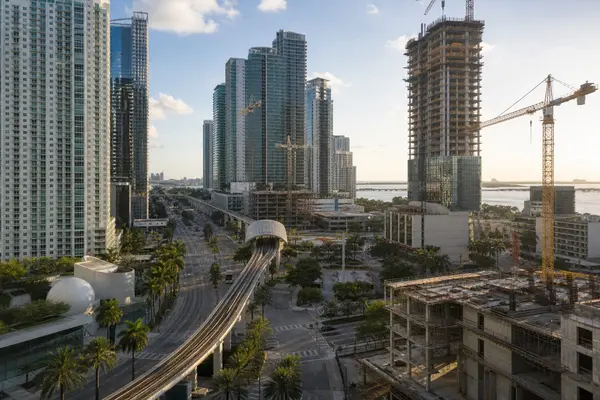
FDOT's Miami-Dade lane-closure notice shows I-395, S.R. 836 and I-95 closures scheduled Sunday, July 19 through Friday, July 24, including eastbound S.R. 836 closures at N.W. 17th Avenue, westbound S.R. 836 closures from N.W. 12th Avenue to N.W. 17th Avenue, I-95 lane closures, and N.W. 17th Street closures under I-95. FDOT also listed a July 20 project pop-up event at the Center for Black Innovation in Overtown.
This is the type of item buyers and owners should track because commute friction changes how neighborhoods feel. Downtown Miami, Overtown, Edgewater, Miami Beach access, the Health District and Brickell are all affected by how smoothly people can move through the core.
Bottom Line for July 20
Miami's market is not standing still. June sales improved, high-end Brickell demand remains real, South Miami redevelopment is still working through infrastructure steps, and downtown construction continues to shape daily movement through the urban core.
For buyers, the opportunity is to use this moment carefully: compare inventory, watch the full monthly payment, and understand which neighborhood changes are real versus still waiting on approvals. For sellers, the message is to price with current data, prepare the home well and respect that buyers have more information and more patience than they did during the fastest part of the market.
If you want help reading Miami-Dade or Broward real estate news through the lens of your own move, call William Gartin with eXp Realty at 305-842-6097 or visit williamgartinrealestate.com.
Sources and Notes
Sources reviewed July 20, 2026: MIAMI REALTORS + RWorld June 2026 Miami-Dade market report; Miami Herald Sunset Place redevelopment report; Miami Living Magazine Cipriani Residences Miami report; Freddie Mac PMMS dated July 16, 2026; Axios Fort Lauderdale World Cup business impact report; and FDOT Miami-Dade I-395/S.R. 836/I-95 lane-closure notice. This article is general real estate information, not legal, tax, insurance or lending advice.
Categories
Recent Posts