Vizcaya History: How Coconut Grove's Gilded Age Estate Shaped Miami Real Estate
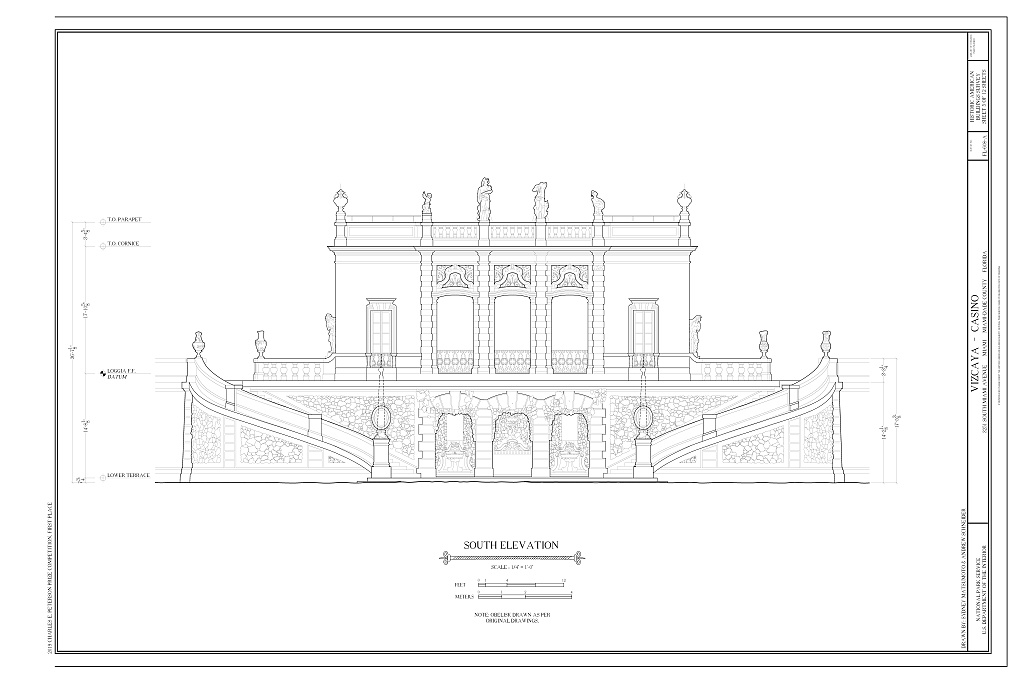
Image credit: Historic American Buildings Survey, Library of Congress, HABS FL-608-A, Sheet 5, "South elevation - Vizcaya, Casino, 3251 South Miami Avenue, Miami, Miami-Dade County, FL." Caption: This Library of Congress architectural drawing shows how Vizcaya's formal waterfront design helped shape Miami's lasting appreciation for Mediterranean-inspired architecture, gardens, and historic real estate.
Vizcaya is one of those historic places in Miami that can still stop a buyer, seller, visitor, or lifelong local in their tracks. Hidden behind tropical foliage on South Miami Avenue, the estate feels quiet and old-world, yet it sits minutes from Brickell, Downtown Miami, Coral Gables, and Coconut Grove's most valuable residential streets. That contrast is exactly why Vizcaya matters to the history of Miami Florida and to the modern Miami real estate conversation.
Built for industrialist James Deering in the early twentieth century, Vizcaya was not just a winter home. It was a statement about what Miami could become: a waterfront city shaped by architecture, landscape, culture, wealth, labor, tourism, preservation, and international taste. Today, the same themes still influence Miami neighborhoods, from historic homes and luxury condos to waterfront homes, walkable village centers, and the way buyers evaluate character versus new construction.
For William Gartin Real Estate, Vizcaya is a useful reminder that Miami real estate is never only about square footage. The strongest properties often carry a deeper story: how the neighborhood developed, why the architecture looks the way it does, what views and streetscapes are protected, and how cultural landmarks continue to shape long-term demand.
Why This Part of Miami History Still Matters
Vizcaya matters because it captured Miami at a turning point. Before Miami became a global real estate market, it was still a young city trying to define itself. Wealthy winter residents were drawn by climate, Biscayne Bay, tropical vegetation, boating, and the promise of privacy. James Deering's estate turned those attractions into a built environment that looked deliberate, refined, and permanent.
The estate also helped set a pattern that is still visible in Coconut Grove and nearby waterfront neighborhoods. Buyers remain drawn to homes that offer mature landscaping, privacy, architectural character, and proximity to the bay. Sellers benefit when a property feels rooted in its surroundings instead of interchangeable. Investors pay attention to places where historic identity, cultural tourism, and scarcity support long-term desirability.
That is why Vizcaya is more than a museum visit. It is part of the vocabulary of Miami architecture and Miami neighborhoods. It helps explain why Mediterranean Revival details, shaded courtyards, loggias, gardens, coral stone, waterfront terraces, and indoor-outdoor living still feel so natural in South Florida.
The Historical Background
James Deering was born in 1859 and became part of the Deering family business world connected to agricultural machinery and International Harvester. After retiring, he chose Miami as the site of a winter residence. According to Vizcaya Museum and Gardens, construction of the Main House took place between 1914 and 1922, and Deering arrived for his first winter residency there on December 25, 1916.
The location was not accidental. Vizcaya was built in Coconut Grove along Biscayne Bay, in an area that was then surrounded by subtropical forest. The estate was planned as a subtropical interpretation of an Italian villa, but it was also modern for its time. Vizcaya's own history notes describe a house built largely of reinforced concrete and equipped with conveniences such as generators, water filtration, elevators, refrigerators, ventilation, an automated telephone switchboard, a central vacuum system, and a partly automated laundry room.
That combination is important. Vizcaya was designed to look old and European, but it functioned as a very advanced Miami home. In real estate terms, it was an early example of something buyers still want today: architectural romance paired with practical comfort.
Key People, Places, and Events
James Deering was the patron, but Vizcaya was the product of a larger creative team. Architect F. Burrall Hoffman, artistic director Paul Chalfin, and landscape designer Diego Suarez helped shape the estate's main house, gardens, and relationship to Biscayne Bay. Library of Congress records for Vizcaya's Casino and Marine Garden identify the estate with Italianate gardens, formal gardens, historic house museum use, waterfront design, and the National Register of Historic Places reference number 70000181.
The estate's most recognizable elements include the Main House, formal gardens, Vizcaya Village, the Stone Barge in Biscayne Bay, garden structures, terraces, sculpture, and the preserved native landscape. The Stone Barge is especially Miami. It functions as both art and breakwater, showing how beauty and coastal protection were intertwined from the beginning.
Vizcaya was also shaped by the people who built it. Historic documentation notes that construction was a major undertaking on the South Florida coastline and employed a meaningful share of Miami's population at the time, including Bahamian workers from Coconut Grove. That history matters because Miami's built environment has always depended on many communities, not only the names attached to the front gate.
After Deering's death in 1925, the estate faced the same forces that tested the rest of Miami. Hurricanes, salt air, humidity, economic cycles, and changing land values all affected its future. Miami-Dade County records note that Deering's heirs conveyed the Main House and gardens to Dade County in 1952 and Vizcaya Village in 1955. The property later became an accredited museum and National Historic Landmark, and current public preservation work continues through Miami-Dade County, Vizcaya Museum and Gardens Trust, and federal preservation funding.
Historic Places You Can Still Visit Today
Vizcaya Museum and Gardens is still open to the public at 3251 South Miami Avenue. Visitors can experience the Main House, gardens, and Vizcaya Village as a living cultural campus. The museum's current public materials describe Vizcaya as a National Historic Landmark and accredited museum with the Main House, 34 furnished rooms, ten acres of landscaped gardens, and the historic village.
For anyone studying Miami historical landmarks, this is one of the best places to understand how early wealth, design ambition, waterfront access, and preservation came together. It is also a useful stop for buyers who want to understand Coconut Grove, Brickell-adjacent living, and the older architectural language that influenced many of Miami's most desirable homes.
The estate sits near neighborhoods where buyers compare very different housing options: historic single-family homes, luxury residences, waterfront estates, newer townhomes, and condo buildings. Seeing Vizcaya in person helps people understand why mature tree canopy, bay breezes, privacy, and architectural detailing still carry real market value.
How This History Shaped Miami's Neighborhoods
Vizcaya helped reinforce Coconut Grove's image as one of Miami's most distinctive places to live. The Grove had already developed its own identity through early settlers, Bahamian influence, boating culture, artists, and a tropical landscape unlike the gridded urban core. Vizcaya added another layer: the idea that a Miami residence could be formal, sophisticated, international, and deeply connected to Biscayne Bay.
That influence can be seen in the way buyers talk about Coconut Grove today. They often mention canopy, privacy, walkability, village feel, proximity to the water, and older homes with character. The same logic applies in nearby Coral Gables, South Miami, the Roads, and Brickell. Historic architecture does not simply make a street prettier. It changes how people feel when they arrive, how long they linger, and how much they value the neighborhood's identity.
Vizcaya also helped establish the importance of preservation in Miami-Dade real estate. Once a landmark becomes part of a community's public memory, the conversation around growth changes. New development has to respond to context. Renovations must respect historic materials and proportions. Public investment in cultural sites can strengthen nearby neighborhood appeal.
What This Means for Miami Real Estate Today
For buyers, Vizcaya's history is a lesson in reading beyond the listing. In Miami real estate, the most valuable location is often shaped by history as much as by amenities. Proximity to Biscayne Bay, mature landscaping, historic architecture, transit access, cultural destinations, and a neighborhood's reputation can all influence buyer demand.
For sellers, the lesson is presentation. A home does not have to be a mansion to benefit from its story. Original details, thoughtful renovations, courtyard layouts, garden views, impact upgrades, and a connection to a historic Miami neighborhood can all help a property stand out. In areas with older homes, buyers want confidence that charm has not come at the expense of maintenance, insurance readiness, or modern function.
For homeowners, Vizcaya is a reminder that preservation and resilience go together in South Florida. The estate's ongoing conservation work reflects real Miami ownership issues: salt air, moisture, hurricane exposure, materials, drainage, and long-term maintenance. Whether someone owns a historic home, a waterfront home, or a newer property, South Florida rewards owners who plan for climate, upkeep, and design quality.
For investors, the broader point is scarcity. Miami can always add new buildings, but it cannot easily recreate a neighborhood with a mature canopy, historic architecture, cultural anchors, and a long-established sense of place. That is one reason historic Miami neighborhoods and established luxury corridors continue to attract attention even as new construction expands across the region. Buyers exploring Miami waterfront homes, luxury homes in Miami, or new construction in South Florida benefit from understanding both the past and the present.
Why Buyers and Sellers Should Understand Miami's History
Miami history gives buyers and sellers better judgment. It explains why some streets feel more desirable than others, why historic districts can affect renovation plans, why architectural styles carry emotional value, and why waterfront property is evaluated differently in a city shaped by storms, saltwater, and tourism.
A buyer who understands Vizcaya will look at Coconut Grove differently. They will notice landscape, setbacks, materials, privacy, and the relationship between home and climate. A seller who understands Vizcaya will appreciate how to market not only the house, but also the lifestyle and neighborhood story around it. A homeowner who understands Vizcaya will see why thoughtful maintenance and preservation can protect long-term value.
This is where a knowledgeable Miami Realtor matters. A local real estate expert should be able to discuss comps, contracts, financing, and inspection issues, but also the deeper neighborhood signals that influence demand. William Gartin Real Estate approaches Miami-Dade real estate with that broader lens: market knowledge, neighborhood context, architectural awareness, and practical guidance for the decision in front of you.
Final Thoughts from William Gartin Real Estate
Vizcaya is one of Miami's great landmarks because it tells several stories at once. It tells the story of Gilded Age ambition, Coconut Grove waterfront living, immigrant and Bahamian labor, Mediterranean-inspired architecture, subtropical design, public preservation, and Miami's long climb from small coastal city to international real estate market.
If you are thinking about buying or selling a home in Miami, it helps to work with a Realtor who understands not just the market, but the history, neighborhoods, architecture, and long-term growth of the city. William Gartin and his team help buyers and sellers make informed decisions throughout Miami and South Florida.
William Gartin Real Estate
305-842-6097
williamgartinrealestate.com
Facebook: https://www.facebook.com/williamgartinre
Buyer questionnaire: https://hul1lsz36ih.typeform.com/to/xmGciMYj
Sources
- Vizcaya Museum and Gardens: About Vizcaya
- Vizcaya Museum and Gardens: The Main House
- Library of Congress: Vizcaya, Casino, HABS FL-608-A
- Library of Congress: Vizcaya, Marine Garden, HALS FL-27-C
- Library of Congress: Vizcaya, Stone Barge, HALS FL-27-A
- Miami-Dade County: Vizcaya preservation restrictive covenants and Save America's Treasures grants
- University of Miami Libraries: Travel, Tourism and Urban Growth in Miami
- Library of Congress image file: Vizcaya Casino south elevation
Categories
Recent Posts