Miami Flooring Ideas That Handle Humidity, Rain, and Resale Value
In Miami, flooring has to do more than look good in listing photos. It has to handle wet shoes after an afternoon storm, sandy feet after a beach day, air conditioning running against summer humidity, pets, guests, and the everyday rhythm of South Florida living. The right floor can make a home feel cleaner, cooler, easier to maintain, and more valuable. The wrong floor can show wear quickly, trap moisture, or make a buyer wonder what else in the home has not been planned for the climate.
That does not mean every Miami home needs the same flooring. A waterfront condo, a Pinecrest single-family house, a Coral Gables estate, and a Cutler Bay home with kids coming in from the yard may all need different solutions. The goal is to choose materials that fit the way you live now while still making sense for future resale.
Here are practical flooring ideas for Miami and South Florida homeowners who want style, comfort, durability, and smarter long-term property value.
Start With Miami's Real Flooring Challenges
Before choosing a color or pattern, think about what your floors actually deal with. Miami homes face high humidity, heavy rain, occasional localized flooding, strong sun through windows, air conditioning condensation, and indoor-outdoor traffic. Flooring that works beautifully in a dry climate may not be the best fit here.
The Environmental Protection Agency notes that moisture control is the key to mold control and recommends keeping indoor relative humidity below 60 percent, ideally between 30 and 50 percent when possible. That matters for flooring because damp, absorbent, or poorly installed materials can hold moisture where you cannot see it.
If your home is in or near a flood zone, flooring choices deserve even more attention. Miami-Dade County encourages residents to review flood zone maps and understand property-specific flood risk. FEMA's flood-damage-resistant material guidance is also a useful reminder that not every attractive finish is equally practical in areas that could experience water intrusion.
Porcelain Tile Is Still a Miami Workhorse
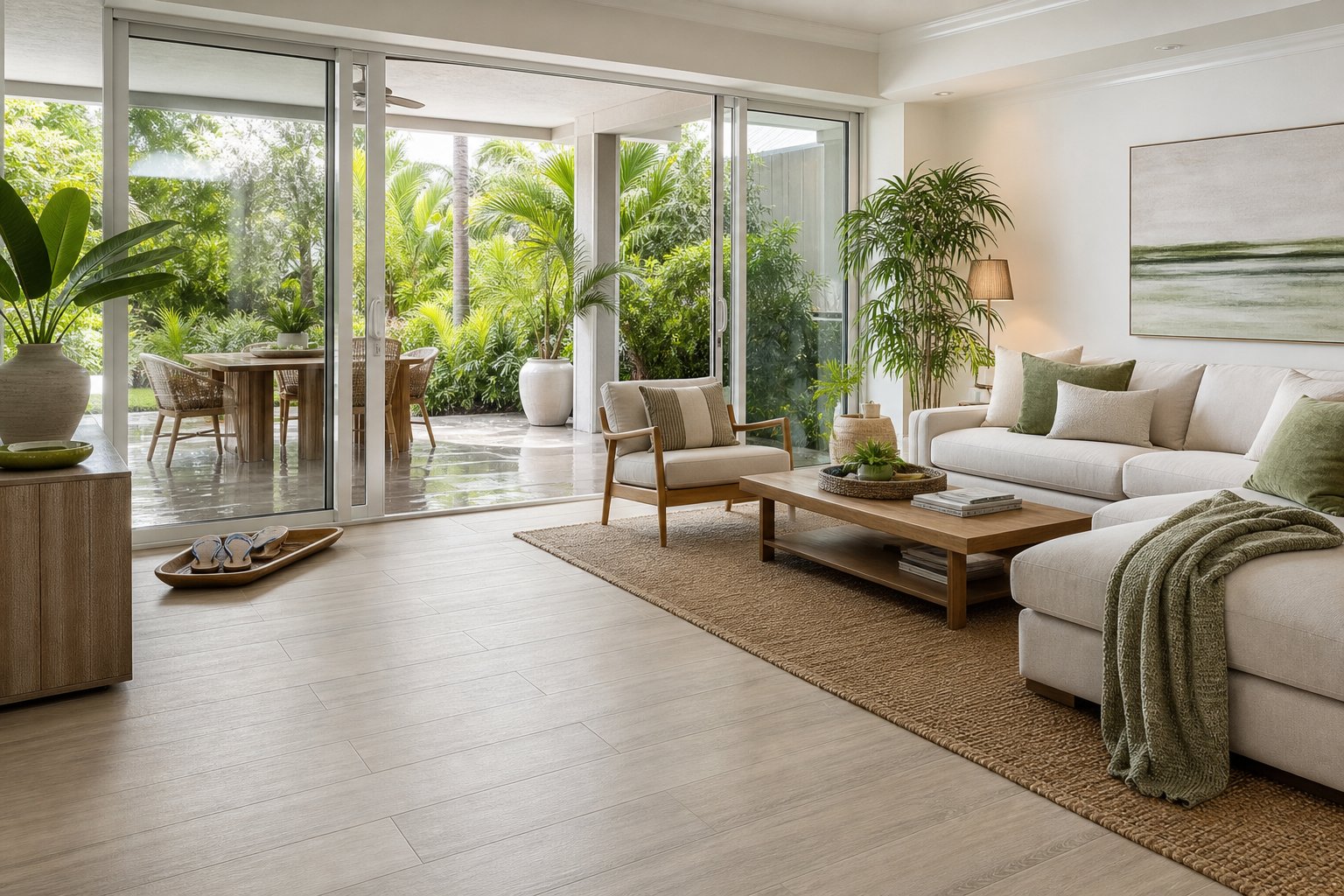
Porcelain tile remains one of the most practical flooring choices for many South Florida homes. It is durable, easy to clean, moisture resistant, and available in styles that look like stone, concrete, terrazzo, limestone, or wood. For Miami homeowners who want one material across the main living area, kitchen, hallways, and bathrooms, large-format porcelain tile can create a clean, modern look without feeling too trendy.
For resale, porcelain tile often makes sense because buyers understand it. It feels appropriate for the climate, especially in homes where people move between indoor and outdoor spaces. In a market where buyers may already be thinking about insurance, maintenance, and long-term costs, a durable floor can quietly build confidence.
Tips for getting tile right:
- Choose a slip-resistant finish for entries, kitchens, bathrooms, and patio-adjacent rooms.
- Use grout colors that are forgiving in a high-traffic home, not bright white everywhere.
- Consider larger tiles to reduce grout lines and make rooms feel more open.
- Ask about proper underlayment and expansion joints, especially in larger rooms.
- Keep a few extra boxes after installation for future repairs.
If you are updating a home in Pinecrest, Palmetto Bay, or Coral Gables, tile can also help bridge classic architecture with a fresher interior style.
Luxury Vinyl Plank Can Work, But Details Matter
Luxury vinyl plank, often called LVP, has become popular because it can offer a warmer look than tile while still being marketed as water resistant or waterproof. It can be a smart choice in bedrooms, family rooms, second floors, and homes where owners want a softer feel underfoot.
But in Miami, not all vinyl plank products should be treated the same. Homeowners should look closely at the product rating, installation method, subfloor condition, warranty language, and whether the material is approved for the room where it will be installed. Water resistant does not mean invincible. Moisture trapped underneath any floating floor can still become a problem if the slab, transitions, or installation are not handled properly.
Before installing LVP, ask:
- Is the product rated for the moisture conditions in this room?
- Does the installer test slab moisture before installation?
- Will the transitions at exterior doors, bathrooms, and kitchens be sealed properly?
- Does the warranty cover South Florida conditions and the exact installation method?
- Can damaged planks be replaced without removing half the room?
LVP can be especially useful when modernizing an older home without the cost or disruption of a full tile installation. Just avoid choosing the cheapest option if the goal is long-term value. Thin, shiny, or overly gray planks can date a renovation quickly.
Be Careful With Carpet in Humid Rooms
Wall-to-wall carpet can make bedrooms feel soft and quiet, but it is not always the most practical choice for Miami homes. Carpet can hold dust, allergens, odors, and moisture, especially in rooms with poor air circulation or frequent patio access. The EPA also points out that porous materials may be difficult or impossible to fully clean if they become moldy.
That does not mean carpet is never acceptable. It may work in upstairs bedrooms or low-moisture spaces with good air conditioning, regular cleaning, and no history of water intrusion. But for main living areas, ground-floor bedrooms, converted garages, or rooms near exterior doors, many Miami homeowners are better served by tile, engineered surfaces, or removable rugs.
A good compromise is to use hard flooring throughout the home and layer washable or professionally cleanable area rugs where you want warmth. Rugs are easier to replace than flooring, and they allow you to update the feel of a room without committing to a permanent material.
Engineered Wood Needs the Right Home and the Right Expectations
Wood floors are beautiful, and engineered wood can be more stable than solid hardwood in many climates. Still, Miami homeowners should be realistic. Wood and moisture are not best friends. In homes with excellent climate control, no water intrusion history, and careful maintenance, engineered wood may work in living rooms or bedrooms. In bathrooms, laundry rooms, or areas near exterior doors, it is usually riskier.
If you love the warmth of wood, compare engineered wood against high-quality wood-look porcelain tile or warmer-toned LVP. Many newer porcelain products look convincing enough to deliver the design feeling without the same moisture concern. For higher-end homes, the right choice depends on architecture, buyer expectations, and how the room is used.
Think Room by Room, Not Just Product by Product
The best flooring plan often varies by room. A single flooring material across the entire home can make a smaller house feel larger, but some spaces need specialized thinking.
Entry and living areas: Choose something that handles wet shoes, sand, and heavy traffic. Porcelain tile is often strongest here.
Kitchens: Prioritize water resistance, cleanability, and comfort. Use rugs or mats that can be washed or replaced.
Bathrooms: Tile usually wins. Pay attention to slip resistance, grout, ventilation, and proper waterproofing.
Bedrooms: LVP, engineered wood, tile with rugs, or low-pile carpet may work depending on the home.
Laundry rooms: Choose flooring that can handle appliance leaks, humidity, and cleaning products.
Patio-adjacent rooms: Use durable surfaces and smart thresholds to reduce water tracking inside.
Floor Color Can Change How Cool and Spacious a Home Feels
Color matters in Miami. Very dark floors can show dust, sand, pet hair, and water spots. Very light floors can feel airy and modern but may show scuffs depending on the finish. Mid-tone natural materials often strike the best balance.
For South Florida homes, consider:
- Warm limestone, sand, or soft greige tones instead of cold gray.
- Natural wood tones that do not lean too orange or too trendy.
- Matte or satin finishes instead of high gloss.
- Consistent flooring through connected spaces to reduce visual clutter.
- Rug layering to add personality without locking the home into one style.
If you may sell within a few years, avoid highly personal patterns in large areas. Bold tile can be beautiful in a powder room or laundry room, but a very specific pattern across the whole home can limit buyer appeal.
Do Not Forget the Subfloor, Doors, and Transitions
Homeowners often focus on the visible material and forget the details that determine whether the floor performs well. In Miami, the installation matters as much as the product.
Ask your installer about slab moisture testing, vapor barriers where appropriate, adhesive compatibility, leveling, expansion gaps, door clearance, baseboards, and transitions at exterior doors. If a floor meets a sliding glass door, bathroom, garage, or laundry room, the transition should help manage daily moisture instead of inviting it underneath the finished floor.
This is also where resale comes in. Buyers may not know every technical detail, but they notice uneven transitions, hollow spots, swelling, lifting edges, cracked grout, and mismatched patchwork. Good installation makes a home feel better maintained.
When Flooring Can Help Home Value
Flooring is not automatically a dollar-for-dollar return project, but it can strongly affect how a home feels. Clean, consistent, climate-appropriate floors can make listing photos look brighter, help rooms feel larger, and reduce buyer objections during showings.
Flooring may be especially worthwhile when:
- The existing floors are damaged, swollen, stained, cracked, or mismatched.
- The home has too many flooring transitions between connected spaces.
- The flooring makes the home feel darker or older than it is.
- You are preparing a property for resale in a competitive price range.
- You want a renovation that improves daily life before you ever sell.
For homes near the water, such as Miami waterfront homes, flooring should be selected with even more care because humidity, outdoor traffic, and storm awareness are part of the lifestyle. The same is true for busy family homes in Cutler Bay, Doral, Kendall, and other South Florida communities where function matters as much as style.
A Simple Flooring Decision Checklist
Before you choose flooring, walk through this quick checklist:
- Does this room have exterior doors, bathroom access, or laundry appliances nearby?
- Has the home ever had flooding, slab moisture, plumbing leaks, or mold concerns?
- Will the flooring be easy to clean after rain, sand, pets, or guests?
- Does the material make sense for Miami humidity and air conditioning patterns?
- Will the color and style still feel current in five to seven years?
- Would a future buyer see this as an upgrade or as something to replace?
- Is the installer experienced with South Florida homes?
A beautiful floor should not make life harder. The best flooring for a Miami home is the one that supports the way the household actually lives.
Final Thought
Flooring is one of those home improvements that changes how a house feels every single day. In Miami and South Florida, the smartest choice is rarely just about the prettiest sample in the showroom. It is about humidity, maintenance, comfort, cleaning, future buyers, and the specific neighborhood and property type.
If you are thinking about updating your floors before selling, buying a home with questionable flooring, or deciding which improvements may actually support your home's value, William Gartin with eXp Realty can help you think through the real estate side of the decision. William helps Miami and South Florida homeowners understand property value, neighborhood expectations, buyer preferences, and smart ways to improve a home before making a major move.
William Gartin with eXp Realty
305-842-6097
williamgartinrealestate.com
Sources and Helpful References
Categories
Recent Posts