Final Walkthrough in Miami and Broward: What Buyers Should Check Before Closing
Updated July 17, 2026.
The final walkthrough is one of the last chances a buyer has to slow down before closing and make sure the home still matches what was agreed to. It is not meant to replace the inspection, the appraisal, or legal review, but it can catch practical problems before money changes hands and keys are handed over.
In Miami-Dade, Broward, and the rest of South Florida, a good final walkthrough should be more than a quick look around. Buyers should think about repairs, appliances, AC, storm protection, permits, access devices, HOA or condo details, and whether anything changed after the inspection period.
This is general real estate education, not legal, tax, mortgage, or inspection advice. Contracts, timelines, repair agreements, and closing requirements can vary, so a licensed professional should review your specific situation.
What the final walkthrough is for
The final walkthrough is usually used to confirm that the property is in the expected condition before closing. The National Association of REALTORS final walkthrough checklist focuses on confirming requested repairs, included items, appliances, heating and cooling, keys, remotes, warranties, and removal of the seller's personal belongings.
For buyers, the goal is simple: verify what you can verify before signing final documents. If something is missing, damaged, unfinished, or different from what was negotiated, your agent can help raise the issue before closing instead of after.
What to bring with you
1. Your contract and repair addenda. Bring the list of repairs, credits, included appliances, fixtures, and personal property that were negotiated. Do not rely on memory.
2. Your inspection report. The inspector may have noted items that needed monitoring. The walkthrough is a good time to look again at those areas, especially after heavy rain or if repairs were promised.
3. Your phone, charger, and flashlight. Take photos or short videos of issues, test outlets if practical, check under sinks, and look inside closets, cabinets, the garage, laundry area, attic access, and exterior storage.
4. A practical checklist. Walk room by room so you do not miss appliances, windows, doors, locks, lights, ceiling fans, AC performance, water heater, garage door opener, irrigation, pool equipment, shutters, or included smart-home devices.
What buyers should check room by room
Repairs: Confirm that seller-agreed repairs were completed, not just started. Ask for receipts, permits when applicable, warranties, and before-and-after photos if they were part of the negotiation.
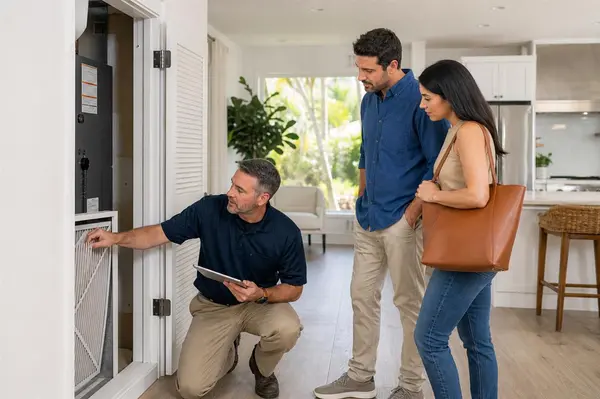
Appliances and systems: Test the refrigerator, oven, dishwasher, washer, dryer, garbage disposal, water heater, AC, ceiling fans, lights, and garage door. In South Florida, AC problems can become expensive quickly, so do not skip basic cooling and thermostat checks.
Plumbing: Run faucets, flush toilets, check under sinks, look around the water heater, and watch for stains, slow drainage, moisture, or active leaks. After rain, look for signs of new roof, window, door, or patio drainage issues.
Doors, windows, and security: Open and close windows and exterior doors, confirm locks work, and ask how keys, gate remotes, mailbox keys, garage remotes, alarm codes, doorbell accounts, and smart thermostats will be transferred.
Included items: Confirm that lighting fixtures, ceiling fans, appliances, window treatments, pool equipment, attached shelving, garage storage, and other included items are still present unless the contract says otherwise.
Cleanout: Check closets, cabinets, attic access, garage, sheds, and outdoor storage. The home should be empty of seller belongings except for items specifically agreed to stay.
South Florida items buyers should not overlook
Storm protection: In Miami-Dade and Broward, ask where shutters, panels, clips, accordion-shutter keys, or impact-window documentation are located. Confirm agreed storm-protection items have not been removed.
Permits and improvements: If the home had recent roof, AC, electrical, plumbing, pool, patio, window, door, fence, or generator work, ask questions early. Miami-Dade notes that building permit inspection history can be searched online by permit number, process number, or address. Broward County's building permit resources and ePermits OneStop can also help buyers understand where permit information may be found, depending on the municipality and jurisdiction.
HOA and condo access: For condos, townhomes, and gated communities, confirm remotes, fobs, gate access, elevator reservations, parking assignments, mailbox keys, pool cards, and move-in rules. A missing access item can create a real headache on moving day.
Waterfront, pool, and outdoor areas: For homes with pools, seawalls, docks, sprinklers, fences, or outdoor kitchens, walk the exterior carefully. For buyers looking at waterfront homes or pool homes in areas like South Florida waterfront communities, Pinecrest, Cutler Bay, Weston, and Pembroke Pines, outdoor systems deserve a careful final look.
How the walkthrough connects to closing documents
The walkthrough is about the home's condition. Closing documents are about the loan, ownership, title, and money. Both matter. The Consumer Financial Protection Bureau says buyers should review the Closing Disclosure before closing and use the time before closing to ask questions and correct errors. The CFPB also explains that the Closing Disclosure is generally provided at least three business days before closing for most mortgages.
That means buyers should be reviewing two tracks at the same time: the physical property and the closing paperwork. A smooth closing depends on both.
Common final walkthrough mistakes
Rushing because the closing is scheduled. A closing appointment on the calendar does not mean you should ignore visible problems. Slow down and document anything that does not match the agreement.
Skipping repairs because there is a receipt. A receipt helps, but buyers should still verify that the repair appears complete and that the affected area was not damaged during the work.
Forgetting exterior areas. Many issues are outside: missing shutters, damaged fences, sprinkler problems, removed landscaping, pool equipment, trash, garage items, or new storm damage.
Ignoring access items. Keys, remotes, fobs, parking decals, mailbox keys, gate codes, smart-device transfers, and alarm instructions can delay a move even when the house itself looks fine.
Treating the walkthrough as a second inspection. If a buyer wants a deeper technical review, that should be discussed with the agent and the appropriate licensed professionals. The final walkthrough is usually a confirmation step, not a full inspection do-over.
What William Gartin recommends
William recommends scheduling the walkthrough early enough that there is time to solve a problem before closing. Bring the contract, repair list, inspection report, and a checklist. Test the practical items. Look at the South Florida details: AC, water intrusion signs, storm protection, access devices, outdoor systems, HOA or condo move-in rules, and permit questions for recent work.
If financing is involved, William can connect buyers with phenomenal lenders, including Joel Gonzalez with MOR Lending, so the loan, cash to close, credits, insurance, and final closing numbers are reviewed before signing.
Buying or selling in Miami-Dade, Broward, or South Florida? Contact William Gartin Real Estate with eXp Realty at 305-842-6097, visit williamgartinrealestate.com, connect on Facebook at facebook.com/williamgartinre, or start with the buyer questionnaire at this quick form.
Sources and helpful links
- National Association of REALTORS: Checklist, Your Final Walk-Through
- Consumer Financial Protection Bureau: Mortgage closing process tools
- Consumer Financial Protection Bureau: Review documents before closing
- Miami-Dade County: Public records for building plans and permits
- Broward County: Building permits
- Broward County: ePermits OneStop
Categories
Recent Posts