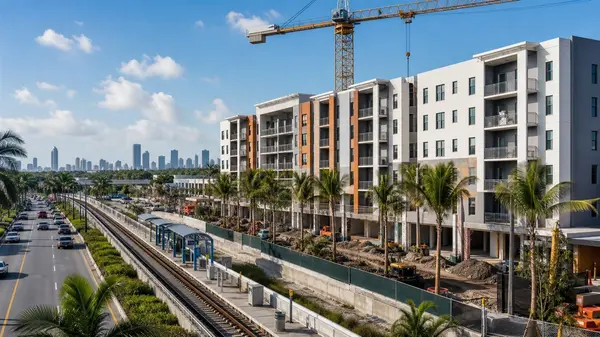
Miami Real Estate News for June 7, 2026: Coral Gables Construction, Fisher Island Debate and World Cup Work Pause
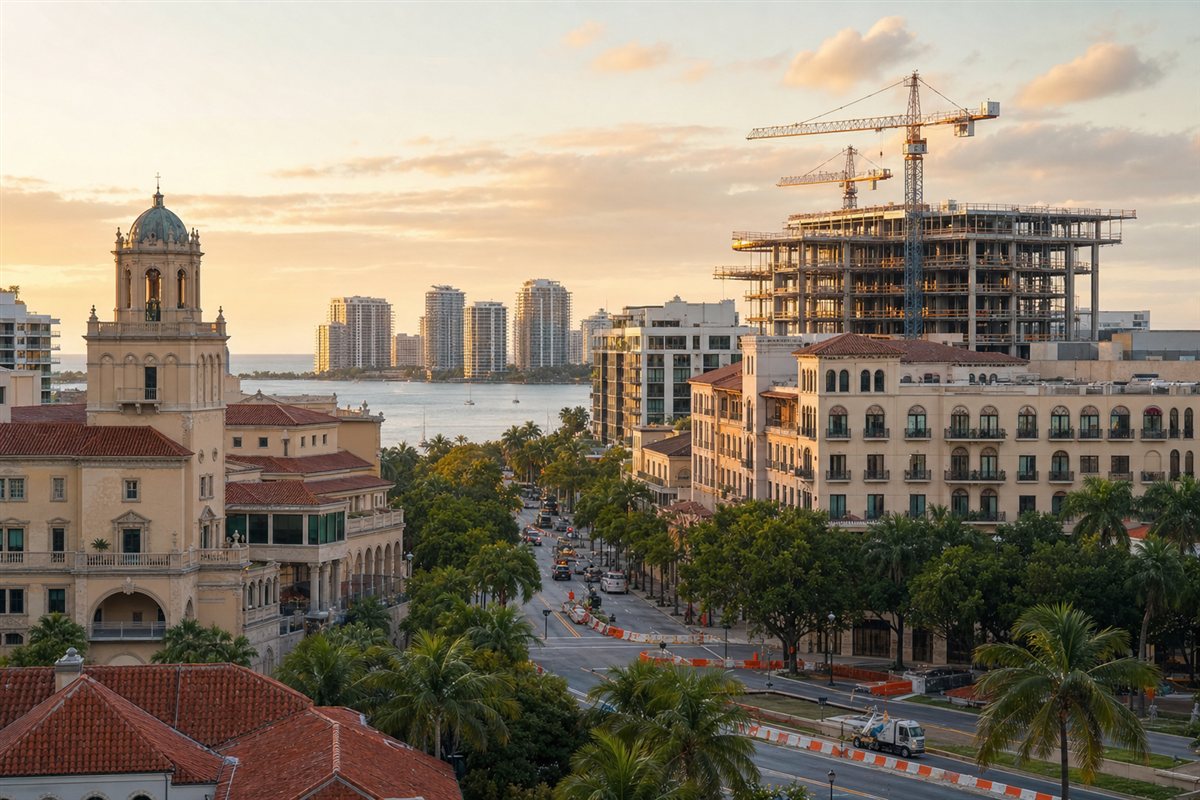 Daily Miami real estate note for Sunday, June 7, 2026.
Miami real estate is moving on several fronts at once this week: lenders are still backing selective new construction, rare waterfront land is tied up in a public-infrastructure fight, World Cup planning is about to affect streets and contractors, and mortgage rates remain the filter every buyer has to run through.
Here is what Miami residents, buyers, sellers, and property owners should know today.
Coral Gables gets another construction-financing signal
Florida YIMBY reported on June 6 that MG Developer and Vertical Developments secured a $100 million construction loan for Alhambra Parc at 33 Alhambra Circle in Coral Gables. The planned mixed-use project is expected to bring 74 luxury residences, 13,000 square feet of office space, and nearly 18,000 square feet of retail space to the downtown Coral Gables district.
That is not just another tower headline. Construction debt has become harder to land in a higher-rate environment, so a Coral Gables project getting financed says something about where lenders still see durable South Florida demand. Walkable infill, established retail streets, strong municipal identity, and limited new luxury supply remain a strong combination.
For Coral Gables owners, the larger point is that well-located urban village real estate continues to attract capital. For buyers, it is a reminder that new product near Miracle Mile, office space, restaurants, and daily services is likely to come at a premium. For sellers, it reinforces why lifestyle details such as walkability, parking, shade, building condition, and access to downtown Gables amenities should be part of the listing story.
Fisher Island shows the pressure on rare waterfront land
The Real Deal reported June 5 that Related Group and Russell Galbut are part of the development team working with HRP Group on the nearly 10-acre Fisher Island fuel-depot property. That site is now at the center of a battle involving developers, Fisher Island residents, Miami-Dade County, PortMiami fuel logistics, and potential eminent domain.
The real estate angle is bigger than one luxury project. Fisher Island is one of the most exclusive residential addresses in the country, but this parcel also has a public-infrastructure role because it supports PortMiami fueling. The county's interest in preserving fuel access, the residents' interest in removing industrial uses, and the developers' interest in redeveloping rare waterfront land all collide in one place.
That is why Miami real estate cannot be read only through price-per-square-foot. Zoning, utilities, port access, environmental conditions, lawsuits, and public necessity can all determine what land is actually worth and how quickly it can be transformed. For luxury buyers and investors, the Fisher Island fight is a useful reminder: the most valuable land can also carry the most complicated entitlement and political risk.
World Cup planning starts to matter for construction and daily life
Miami-Dade County announced its transportation plan for FIFA World Cup 2026 and the FIFA Fan Festival on June 2. The tournament runs from June 11 through July 19, Miami-Dade will host seven matches at Miami Stadium in Miami Gardens, and the Fan Festival is expected at Bayfront Park from June 13 through July 5. County officials said they expect more than 600,000 residents and visitors during the tournament period.
The official plan includes free Game Day Express shuttles for verified ticket holders from transportation hubs such as Golden Glades, Aventura Brightline, Dr. Martin Luther King Jr. Plaza Metrorail Station, Seminole Hard Rock Hotel & Casino, and Amerant Bank Arena for Broward travelers.
Separately, GoPermit reported that Miami-Dade's Department of Transportation and Public Works announced a temporary moratorium on construction work and staging in portions of public right-of-way beginning Monday, June 8, 2026, and ending Sunday, July 19, 2026. The reported affected areas include parts of Downtown Miami, Brickell, Miami Gardens, and designated mobility corridors tied to event transportation.
For homeowners and sellers, this is practical. If you are preparing a listing in Downtown Miami, Brickell, Miami Gardens, or near an event corridor, coordinate photos, repairs, vendor access, and showing windows with traffic and work restrictions in mind. For buyers, plan extra time around inspections, walk-throughs, appraisals, and commute tests. A neighborhood can feel very different during a global event than it does on a normal weekday.
Rates cooled, but affordability still needs discipline
Freddie Mac's June 4 Primary Mortgage Market Survey showed the average 30-year fixed mortgage rate at 6.48%, down from 6.53% the prior week. The 15-year fixed rate averaged 5.79%.
A small rate move helps, but it does not erase Miami's payment reality. Buyers still need to compare insurance, HOA dues, taxes, assessments, reserves, and financing type before deciding what is affordable. That is especially true in the condo market, where building financeability can matter as much as the sale price.
The latest MIAMI REALTORS April 2026 report shows why property type matters. Miami-Dade total home sales rose 5.6% year over year, with single-family sales up 8.6% and existing condo sales up 2.8%. At the same time, months of supply were very different by category: single-family homes sat at 5.4 months, which MIAMI REALTORS identifies as a seller's market, while existing condos were at 12.9 months, a buyer's market.
That split is the Miami market in one sentence: houses and well-located luxury inventory can still move with leverage, while many condo buyers have more room to negotiate and more homework to do.
What to watch this week
Watch for any new Coral Gables construction timing around Alhambra Parc, because lender-backed projects can affect nearby retail momentum, traffic, and buyer expectations. Watch the Fisher Island fuel-depot dispute because it touches luxury waterfront development, PortMiami infrastructure, and county authority. Watch World Cup mobility changes because they will affect real streets, not just sports fans. And watch mortgage rates because a small shift can change what buyers can afford in Miami-Dade and Broward.
For anyone buying, selling, or investing in South Florida, the useful question is not "Is Miami up or down?" It is more specific: which neighborhood, which property type, which financing path, which construction timeline, and which local issue could change daily life after closing?
If you want help reading these Miami real estate signals neighborhood by neighborhood, connect with William Gartin Real Estate. William Gartin with eXp Realty helps buyers, sellers, and homeowners understand what local news actually means for property value, timing, negotiation, and quality of life across Miami-Dade, Broward, and South Florida.
William Gartin with eXp Realty
305-842-6097
williamgartinrealestate.com
Sources and notes
- Florida YIMBY: Alhambra Parc construction loan in Coral Gables
- The Real Deal: Fisher Island fuel-depot redevelopment battle
- Miami-Dade County: FIFA World Cup 2026 transportation plan
- GoPermit: FIFA World Cup 2026 construction moratorium notice
- Freddie Mac: June 4, 2026 Primary Mortgage Market Survey
- MIAMI REALTORS: April 2026 Miami-Dade market report
Categories
Recent Posts