Miami Real Estate News for July 10, 2026: Grove Isle Luxury, Condo Costs and Rates
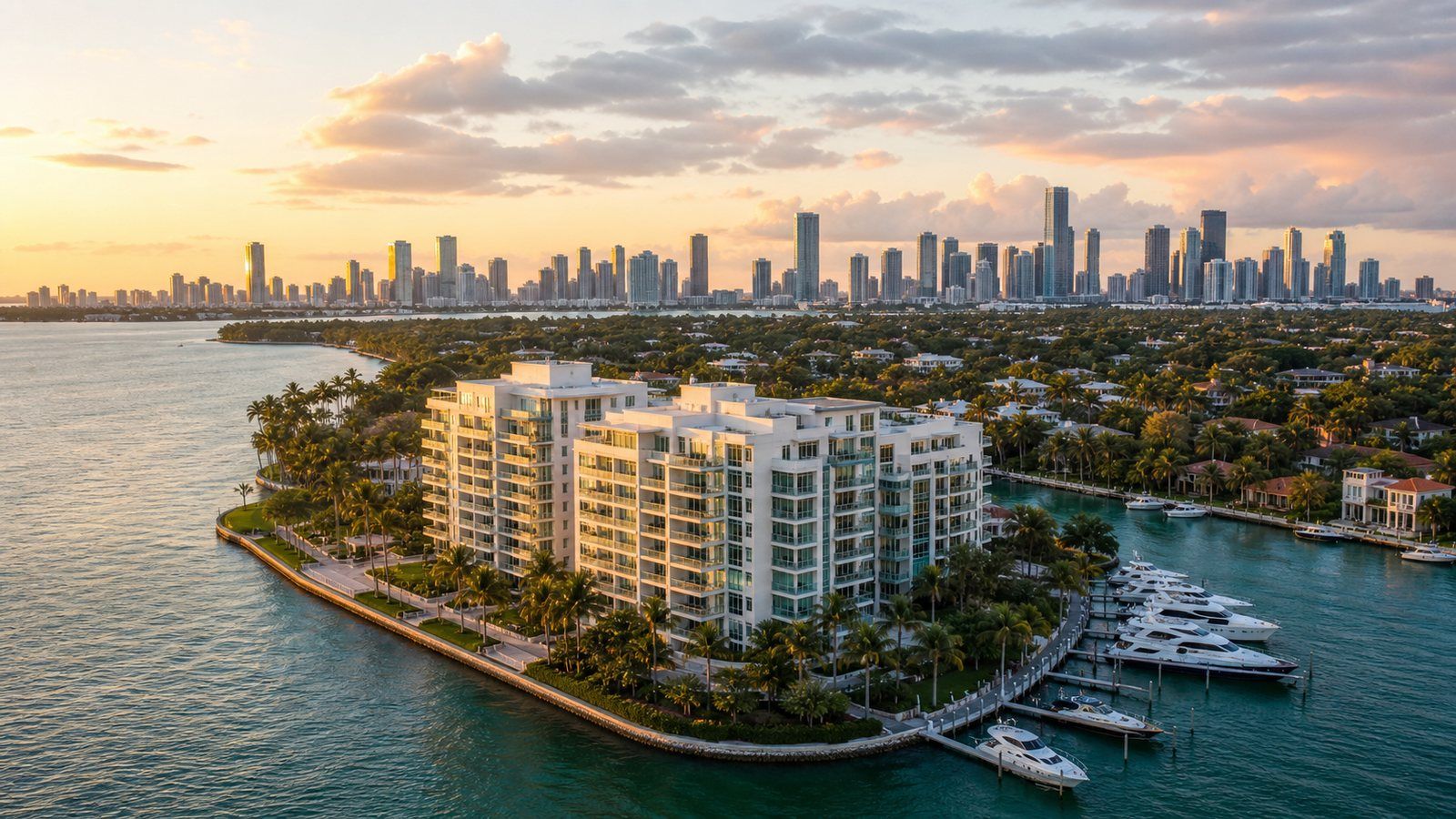
Miami real estate news on Friday, July 10, 2026 starts on Biscayne Bay, where a new $23.5 million penthouse listing at Vita at Grove Isle is putting Coconut Grove's ultra-luxury condo market back in the spotlight. The headline is not only the price. It is what this sale says about limited waterfront supply, private-island living, buyer liquidity, and the split personality of Miami's condo market right now.
At the high end, well-located new construction is still finding deep-pocketed buyers. In the broader resale condo market, buyers are looking harder at insurance, association budgets, special assessments, financing rules, and the true monthly cost of ownership. That contrast is the story Miami residents, buyers, sellers, and condo owners should be watching this week.
Grove Isle Shows How Scarce Miami Waterfront Still Commands Attention
The latest Grove Isle news centers on Vita at Grove Isle, the boutique luxury project by Ugo Colombo's CMC Group on the private island off Coconut Grove. The New York Post reported this week that a nearly 7,000-square-foot penthouse is listed for $23.5 million, with a rooftop terrace, private pool and Biscayne Bay views. The same report noted that Vita is the first new building on the island since 1979, has 65 residences, was about 90% sold before completion, and passed $400 million in closings in under 60 days.
For Miami real estate, the takeaway is bigger than one expensive penthouse. Coconut Grove has become one of Miami's most watched luxury submarkets because it offers what many newer mainland districts cannot easily recreate: old-growth greenery, bay access, village-scale restaurants and shops, elite schools nearby, and a quieter residential feel close to Brickell, Coral Gables and Downtown Miami.
That scarcity supports pricing for a handful of new waterfront projects, but it also keeps neighborhood politics intense. Grove Isle has a long history of development disputes, and recent resident concerns have focused on views, density, island character, older covenant issues and city approvals. Buyers should read that as a reminder that luxury real estate is not just about finishes. In Miami, zoning history, building governance, access, resiliency, marina rights and neighbor relations can all shape long-term value.
The Condo Market Is Not One Market
The latest MIAMI REALTORS May 2026 report shows why broad headlines can be misleading. Miami-Dade total home sales rose 7.9% year over year in May, with single-family transactions up 10.5% and existing condo sales up 5.4%. Million-dollar-plus sales rose 14.7%, and cash remains a major force in Miami, especially in the condo segment.
At the same time, condo pricing and inventory tell a more nuanced story. MIAMI REALTORS reported that the Miami-Dade existing condo median price was $415,000 in May, down 2.35% from a year earlier, while condo inventory represented 12.9 months of supply. Single-family homes, by comparison, had 5.2 months of supply and a $680,000 median price. That means the negotiating environment for a waterfront resale condo in an older building can look completely different from the demand picture for new luxury product in Coconut Grove, Brickell, Edgewater, Sunny Isles or Miami Beach.
For sellers, pricing needs to match the exact building and buyer pool, not just the neighborhood name. For buyers, inventory can create opportunity, but only after reviewing the association's financials, inspection history, reserves, insurance, pending litigation and special-assessment exposure.
Carrying Costs Are Becoming Part of the Main Search
National reporting this week underscored what many South Florida condo owners already feel: list price is only one part of affordability. Rising association fees, insurance costs, reserve funding, repair obligations and lender scrutiny can materially change the true cost of a condo. MarketWatch reported that condo buyers are increasingly being pushed to look past asking prices and focus on fast-growing ownership costs, including reserve and assessment pressure.
In Miami-Dade and Broward, that matters because so many coastal and near-coastal buildings are older, exposed to salt air, subject to structural-inspection requirements, and dependent on insurance markets that have remained expensive. A unit that looks discounted can still be a poor fit if the monthly fee, assessment schedule or financing risk is not clear. A newer building with higher pricing may still appeal to some buyers if the reserve picture, amenities, insurance structure and building condition are easier to understand.
The practical rule for Miami condo buyers in July 2026 is simple: do not compare units by price per square foot alone. Compare total monthly cost, building age, reserve position, pending capital projects, financing eligibility, insurance, rental rules, parking, storage, flood exposure and the likelihood of future assessments.
Rates Moved Higher Again, But Cash Buyers Still Shape Miami
Mortgage rates are adding another layer. The Associated Press reported on July 10, 2026 that the average 30-year fixed U.S. mortgage rate rose to 6.49%, up from 6.43% the prior week, according to Freddie Mac. The 15-year fixed rate also moved up to 5.82%.
For financed Miami buyers, a small move in rates can change the monthly payment enough to affect budget, price range and offer strategy. For sellers, it can reduce the number of buyers who can stretch into a property without credits, buydowns or a price adjustment. But Miami is not a normal rate-sensitive market. MIAMI REALTORS reported that cash represented 38.7% of all Miami closed sales in May and nearly half of existing condo sales. That cash cushion is one reason Miami luxury and international-buyer segments can keep moving even when national affordability looks strained.
The best strategy depends on the buyer. A financed primary-home buyer should be disciplined about monthly payment, insurance and HOA fees. A cash buyer should still underwrite the building like a lender would, because future resale depends on whether the next buyer can finance the unit.
Watch the Lifestyle Signals: Waterfront Dining, Access and Construction
Miami's luxury market is also about daily life. PROFILEmiami reported this week that Gioia Hospitality Group signed a lease for a new waterfront restaurant concept at Aimco's ultra-luxury Edgewater property at 560 NE 34th Street. That kind of amenity news matters because buyers increasingly compare neighborhoods by walkability, restaurant energy, waterfront access and the ease of living there year-round.
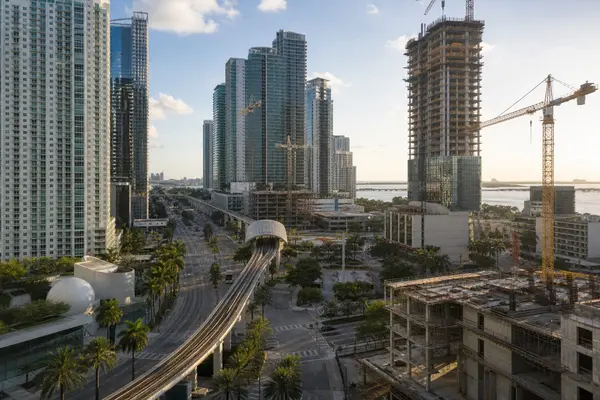
Infrastructure matters too. The FDOT/GMX Connecting Miami project continues to affect movement through Downtown Miami, Overtown, Edgewater, the MacArthur Causeway approach and the I-95/S.R. 836/I-395 interchange. The official project page lists an anticipated late-2029 completion and an $866 million cost, while the July 8 weekly update flagged closures and traffic changes for the current July 8-10 and July 12-17 work windows.
For buyers looking at Coconut Grove, Brickell, Downtown, Edgewater, Miami Beach or airport-adjacent neighborhoods, commute patterns should be part of the showing schedule. Tour at the time of day you actually drive. Check school, office, airport and beach routes. A great condo can feel very different if construction adds friction to the daily routine.
What This Means for Miami Buyers and Sellers This Weekend
For buyers, today's Miami real estate message is to separate aspiration from underwriting. Grove Isle shows that rare waterfront product still commands global attention. The broader condo market shows that buyers have more leverage in some buildings, but only if they know how to read the building's financial and physical condition.
For sellers, the message is precision. A well-positioned home in a scarce submarket can still attract strong interest, especially if it speaks to cash, relocation, international or luxury buyers. But a condo with unresolved association questions, old photos, unclear fee history or optimistic pricing can sit even in a strong Miami market.
For owners, now is the time to understand your building before you need to sell. Know the budget, reserves, insurance renewal, inspection schedule, major repairs and assessment history. Those details are becoming part of the first conversation, not the last-minute due diligence.
Miami real estate is still moving, but it is moving unevenly. The winners are the people who understand the difference between a headline price, a monthly cost, a building story and a neighborhood's long-term direction.
William Gartin Real Estate helps Miami and South Florida buyers, sellers and homeowners understand the daily news behind the market, from Coconut Grove waterfront condos to Broward development, mortgage-rate pressure, construction impacts and neighborhood value. If you are planning a move or trying to understand what today's headlines mean for your property, connect with William Gartin Real Estate at williamgartinrealestate.com.
Sources and Further Reading
- New York Post: Vita at Grove Isle penthouse listing and project context, July 9, 2026
- MIAMI REALTORS: Miami-Dade May 2026 market report, June 16, 2026
- Associated Press: Freddie Mac mortgage rate update, July 10, 2026
- MarketWatch: condo carrying-cost pressure, July 2026
- FDOT/GMX Connecting Miami project overview
- FDOT/GMX Connecting Miami traffic updates, July 2026
- PROFILEmiami: Edgewater waterfront restaurant lease, July 8, 2026
Categories
Recent Posts