Miami Pantry Organization Ideas That Make Everyday Cooking and Storm Season Easier
A pantry may not be the first thing people think about when they talk about home improvement, but it can quietly change how a home feels every day. A well-organized pantry makes cooking easier, grocery shopping smarter, school mornings smoother, and storm-season preparation less stressful. In Miami and South Florida, where summer humidity, heavy rain, hurricane season, and busy family schedules all meet in the kitchen, pantry organization is more than a design detail. It is a practical homeowner upgrade.
The best pantry does not need to be large or expensive. It needs to be easy to see, easy to restock, easy to clean, and easy to use when life gets busy. For some homes, that means a walk-in pantry with labeled zones. For others, it means one tall cabinet, a few pull-out shelves, or a better system inside a small kitchen. The goal is the same: create a space that supports daily living and helps your home run better.
For Miami homeowners, a pantry can also support storm-season readiness without turning the kitchen into a cluttered storage room. Ready.gov recommends preparing food, water, and emergency supplies before severe weather threatens. The trick is organizing those supplies in a way that fits real life, so they are useful, visible, rotated, and not forgotten until the next storm watch appears.
Start With a Pantry Reset
Before buying bins, labels, jars, or shelving, start with a full reset. Take everything out of the pantry or cabinet and group items by type. This step may feel tedious, but it usually reveals the real problem. Many pantries are not short on space; they are short on visibility.
Group items into categories such as:
- Breakfast items
- Pasta, rice, grains, and beans
- Canned goods and jarred foods
- Snacks and lunchbox items
- Baking supplies
- Oils, vinegars, sauces, and condiments
- Paper goods and disposable supplies
- Storm-season food, water, and emergency items
Check expiration dates as you sort. Wipe shelves, vacuum crumbs, and look for signs of moisture, pests, rusted cans, or sticky spills. In South Florida homes, pantry maintenance should include humidity awareness. Food packaging can soften, cardboard can attract pests, and poorly sealed dry goods may not last as long in a warm kitchen.
Create Everyday Zones First
The most useful pantry is organized around how you actually live. Put daily-use items at eye level or within easy reach. Keep occasional items higher or lower. Heavy items should be stored on lower shelves so they are safer to lift and less likely to damage shelving.
For a family home, a practical pantry layout might include:
- A breakfast zone with oatmeal, cereal, coffee, tea, and grab-and-go items
- A dinner zone with pasta, rice, canned tomatoes, sauces, and seasonings
- A lunch zone with snacks, crackers, nut butters, and school items
- A baking zone with flour, sugar, baking soda, cocoa, and extracts
- A backstock zone for duplicates and bulk purchases
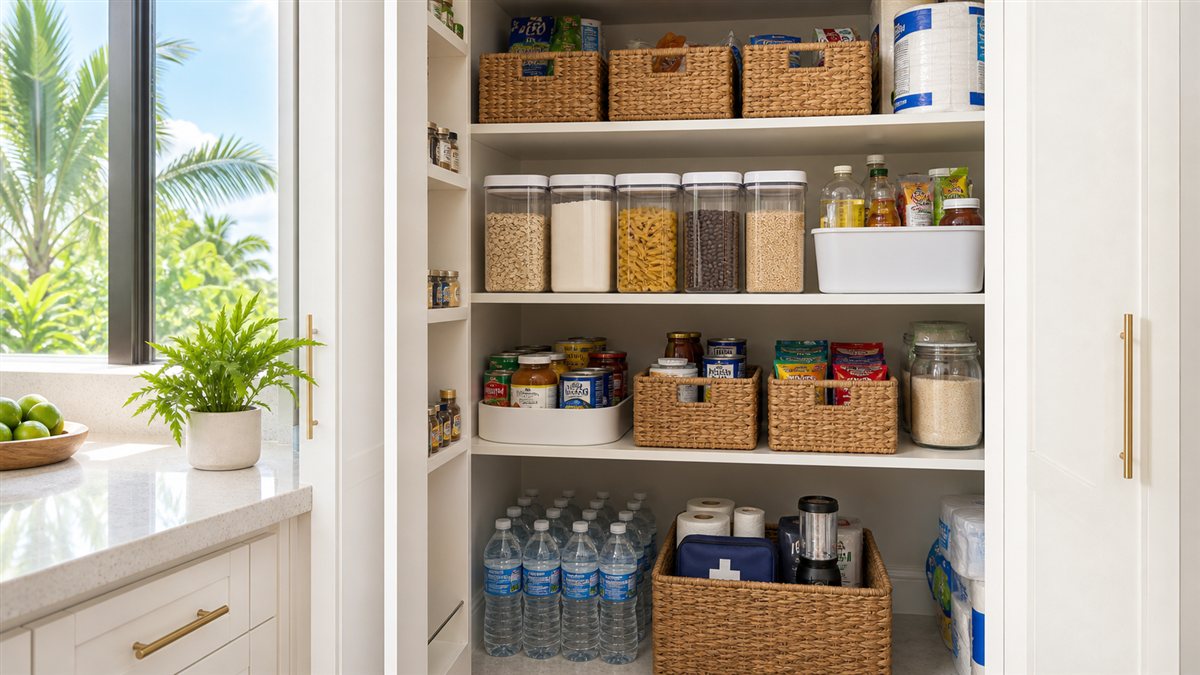
- A storm-season zone for shelf-stable food, water, flashlights, and first-aid basics
This approach helps prevent overbuying. When you can see what you already own, you are less likely to buy a fourth jar of peanut butter or forget about cans pushed to the back. It also makes the kitchen feel calmer, which matters in homes where the kitchen is the daily command center.
Use Clear Containers Where They Actually Help
Clear containers can make a pantry look polished, but they should solve a real problem. They are best for items you use often and refill regularly, such as rice, oats, flour, sugar, pasta, cereal, coffee pods, or pet treats. They help you see when supplies are low and can protect dry goods from humidity better than an open bag or torn cardboard box.
For South Florida homes, choose containers with tight-fitting lids. Label the container and, when needed, write the expiration date or cooking instructions on the back or bottom. Do not decant every single item just for appearance. Some foods are better kept in original packaging because the package includes nutrition, allergen, expiration, or preparation information.
If you are organizing a smaller kitchen in a condo, townhome, or older single-family home, stackable containers can create vertical storage. Homeowners comparing layouts in areas like Doral, Kendall, Palmetto Bay, or Cutler Bay often notice how much storage affects the feel of a kitchen. A small pantry that functions well can make a home feel larger and easier to live in.
Make Storm Supplies Part of the System
Storm-season supplies should not be scattered across five cabinets, the garage, and a hallway closet. They should be easy to find quickly. That does not mean they all have to live in the pantry, but the pantry is a smart place for shelf-stable food, manual can openers, water, and everyday items you can rotate through the year.
A practical storm-season pantry section may include:
- Ready-to-eat canned food
- Shelf-stable proteins
- Crackers, granola bars, and snacks
- Manual can opener
- Bottled water or clearly planned water storage
- Paper plates, napkins, and utensils
- Flashlights and batteries stored nearby
- Basic first-aid items if they are not kept elsewhere
Ready.gov recommends having food and water prepared as part of an emergency kit. In a Miami home, the easiest system is one you actually maintain. Store items you will eat anyway, rotate them into normal meals, and replace them before hurricane season peaks. This keeps your supplies fresh and reduces waste.
Use the First-In, First-Out Rule
Restaurants use a simple storage rule that also works at home: first in, first out. Put newer items behind older ones so the older food gets used first. This matters for canned goods, pasta, grains, sauces, snacks, bottled drinks, and storm-season food.
Try using small shelf risers for cans so you can see the back row. Lazy Susans work well for sauces, oils, spices, and smaller jars. Baskets can hold snack categories, baking packets, or breakfast items. Deep bins are useful for backstock, but they should be labeled clearly so they do not become hidden junk drawers.
For hurricane-season supplies, mark a quick review date on your calendar. A simple June and November check can help you prepare before the busiest part of the season and clean up afterward. The USDA also provides food-safety guidance for power outages, which is helpful for South Florida homeowners because refrigerator and freezer decisions can become important after a prolonged outage.
Protect Food From Heat, Humidity, and Pests
Miami kitchens can be warm and humid, especially in older homes, homes with west-facing exposure, or properties where the AC is set higher during travel. Pantry storage should account for that. Keep food away from appliances that produce heat, such as ovens, dishwashers, and water heaters. Avoid storing food in garages unless it is specifically safe for that environment.
Use airtight containers for dry goods, keep shelves clean, and avoid leaving open bags of flour, rice, cereal, or pet food. If your pantry has a musty odor, soft drywall, bubbling paint, or recurring pests, do not treat it as just an organization problem. It may be a moisture, sealing, or maintenance issue that deserves attention.
For homeowners thinking about resale, this matters. Buyers notice clean kitchens, fresh-smelling storage areas, and cabinets that feel well maintained. A pantry does not have to be fancy, but it should feel dry, clean, and functional.
Add Small Upgrades That Make the Pantry Easier to Use
Some of the best pantry upgrades are simple. You do not need a full kitchen renovation to make storage feel better. Focus on changes that improve access and visibility.
Useful upgrades include:
- Battery-powered or hardwired pantry lighting
- Pull-out shelves for deep cabinets
- Door-mounted racks for spices or small packets
- Clear bins for snack categories
- Stackable containers for dry goods
- Shelf risers for canned goods
- Heavy-duty lower shelves for water and bulk items
- A small inventory list for storm supplies
Lighting is especially underrated. A dark pantry invites clutter because homeowners cannot see what is in the back. A simple motion-sensor light can make the space feel cleaner and more custom. Pull-outs are another high-impact improvement, especially for deep lower cabinets where items disappear.
Make It Work for Guests, Kids, and Daily Routines
A well-organized pantry should match the people who live in the home. If children pack lunches, keep approved snacks where they can reach them. If you host family often, create a guest snack basket or coffee station. If you cook frequently, keep oils, spices, grains, and canned staples near the prep area. If you have pets, store pet food in a sealed container away from human food and moisture.
This is where pantry organization becomes a lifestyle upgrade. It reduces daily friction. You spend less time searching, less time cleaning up spills, and less money replacing forgotten food. For busy Miami households, that kind of efficiency can make a home feel more comfortable without changing the square footage.
Storage Is a Real Home Value Feature
Buyers may not always say they are looking for a better pantry, but they respond to homes that feel organized and easy to live in. Kitchen storage, laundry storage, closet storage, garage storage, and pantry function all influence how spacious a property feels. This is true for larger homes in Pinecrest and Coral Gables, but it is also true for condos, townhomes, and compact single-family homes across Miami-Dade and Broward.
If you are preparing a home for future resale, a pantry refresh is a budget-friendly improvement. Clean shelves, matching bins, labeled zones, good lighting, and visible floor space can make a kitchen feel more cared for. It photographs better, shows better, and helps buyers imagine their own routines in the home.
A Simple Weekend Pantry Plan
If you want to improve your pantry without turning it into a major project, use this simple weekend plan:
- Empty one shelf or cabinet at a time.
- Throw away expired items and donate unopened food you will not use.
- Group food by category.
- Wipe shelves and check for moisture or pests.
- Move daily-use items to the most accessible shelves.
- Create one clearly labeled storm-season supply zone.
- Add only the bins, lights, or containers that solve a specific problem.
The result should feel practical, not staged. A pantry that works well for real life is more valuable than one that looks perfect for one photo and becomes frustrating a week later.
Thinking About Improving Your Home or Understanding Its Value?
Small home improvements can have a meaningful impact on how a property feels day to day. A better pantry can support cooking, organization, storm-season readiness, grocery planning, and resale presentation. It is the kind of practical upgrade that helps a home feel more comfortable, more prepared, and more thoughtfully maintained.
If you are thinking about buying, selling, improving, or understanding the value of your South Florida home, contact William Gartin with eXp Realty. William helps Miami and South Florida homeowners make smart real estate decisions, understand what buyers notice, and plan improvements that support both lifestyle and long-term property value.
William Gartin with eXp Realty
305-842-6097
williamgartinrealestate.com
Helpful Sources
Categories
Recent Posts