Venetian Pool History: How Coral Gables' Quarry Became a Miami Real Estate Landmark
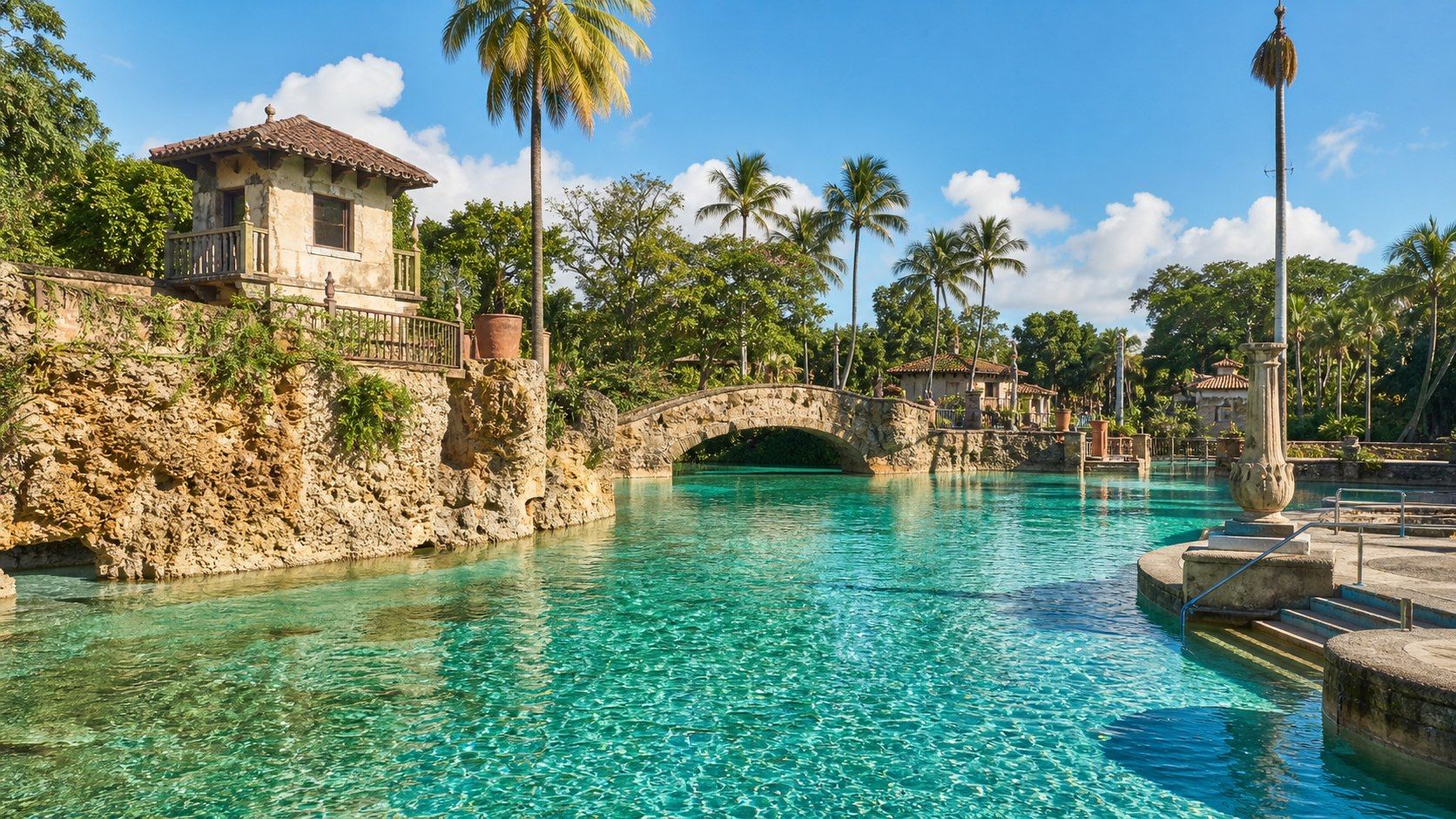
Some Miami landmarks are beautiful because they were designed that way from the beginning. Others are beautiful because someone saw potential where everyone else saw leftover land. The Venetian Pool in Coral Gables is both. What began as a limestone quarry tied to George Merrick's early building campaign became one of the most memorable historic places in Miami, a swimming pool framed by coral rock, waterfalls, grottos, palms, bridges, and Mediterranean Revival detail.
For anyone studying Miami history, the Venetian Pool is more than a place to cool off. It is a window into how Coral Gables was planned, marketed, preserved, and protected. For buyers, sellers, homeowners, and investors, it also explains why certain Miami neighborhoods carry value that goes beyond square footage. Architecture, walkability, landscape, history, and civic identity all matter in Miami real estate. Few places show that better than the Venetian Pool.
Why This Part of Miami History Still Matters
The history of Miami Florida is often told through railroads, ports, beaches, hurricanes, immigration, and the rise of the skyline. Coral Gables adds another layer: the idea that a city could be intentionally designed around beauty, architecture, public places, and a lifestyle brand. Long before modern developers talked about placemaking, Merrick understood that neighborhood identity could create real estate demand.
The Venetian Pool matters because it helped turn that concept into something tangible. It was not just a pool. It was a public amenity, a marketing showpiece, a civic landmark, and a symbol of the Mediterranean character that still defines much of Coral Gables. When buyers today search for houses in Coral Gables, they are often buying into that same story: tree-lined streets, historic architecture, strict design standards, cultural depth, and a sense of place that feels different from newer parts of Miami-Dade.
The Historical Background
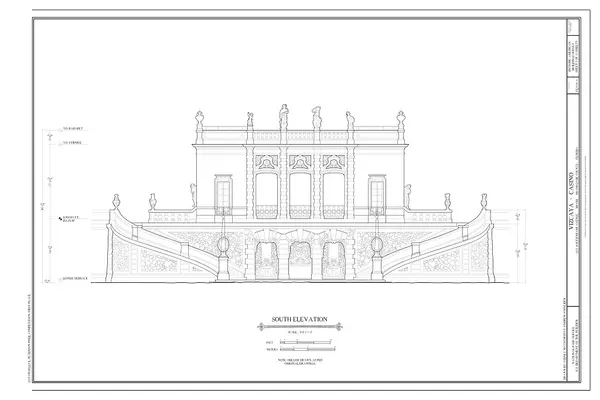
According to the City of Coral Gables, the Venetian Pool opened in 1924 as the Venetian Casino. It grew out of George Merrick's larger plan for Coral Gables, a city built around Mediterranean features, plazas, grand entrances, public spaces, and homes that felt connected by design rather than scattered by accident.
The site's origin is practical. Coral Gables needed local limestone for early construction. As Merrick's team built Mediterranean-style homes, entrances, and civic spaces, limestone was taken from a quarry pit. Instead of leaving the quarry as a scar in the landscape, Merrick, artist Denman Fink, and architect Phineas Paist helped transform it into an elegant aquatic landmark. That reuse is one of the most interesting parts of the story. The same material that helped shape Coral Gables architecture also shaped one of its signature public places.
The pool was designed with Venetian and Mediterranean references, including bridges, grotto-like spaces, waterfalls, coral-rock edges, and architectural detailing that made the setting feel theatrical without losing its connection to local material. Coral Gables later completed a historical renovation in 1989, and the City still presents the pool as one of its signature attractions.
Key People, Places, and Events
George Merrick is the central figure. He was not simply selling lots. He was selling a vision of "The City Beautiful," a planned community with a recognizable look and a civic identity. The Venetian Pool helped make that vision visible. It gave residents and visitors a place where Coral Gables' Mediterranean story could be experienced, photographed, and remembered.
Phineas Paist brought architectural discipline to the project. Paist is closely associated with Coral Gables' early civic architecture, and his work helped establish the architectural language that still influences the city. Denman Fink contributed the artistic imagination that helped Coral Gables feel cohesive and distinctive. Together, their work at the Venetian Pool shows how architecture, landscape, art, and real estate development overlapped in 1920s Miami.
The pool also became a social destination. The City of Coral Gables notes that in its early years the Venetian Casino attracted well-known visitors and hosted orchestra concerts. The pool could be emptied so musicians could perform from the floor of the quarry, using the setting itself as part of the experience. In 2001, a similar concert was held to commemorate Coral Gables' 75th birthday, showing how the place remained connected to local memory decades after the Florida land boom.
Historic Places You Can Still Visit Today
The Venetian Pool is located at 2701 De Soto Boulevard in Coral Gables. The City of Coral Gables describes it as one of the city's main attractions, with waterfalls, cave-like grottos, coral rock, a bridge, and a setting that feels unlike a standard public pool.
It also sits within a larger Coral Gables historic landscape. Nearby landmarks such as the Biltmore Hotel, Coral Gables City Hall, Merrick House, the De Soto Fountain, Douglas Entrance, and Miracle Mile help tell the broader story of Merrick's planned community. For residents, that concentration of landmarks is part of daily life. For buyers, it is part of why Coral Gables often competes in a different category than many other Miami neighborhoods.
How This History Shaped Miami's Neighborhoods
The Venetian Pool shows how amenities can shape neighborhood identity. In modern real estate, buyers often talk about lifestyle: parks, restaurants, schools, walkability, architecture, commute routes, waterfront access, and cultural places. Coral Gables was built with that logic early. Public spaces and landmarks were not afterthoughts. They were part of the value proposition.
That idea influenced how Miami-Dade real estate evolved. Today, strong neighborhood identity can support buyer demand even when market conditions shift. Coconut Grove, Coral Gables, Miami Beach, Morningside, Little Havana, and other historic Miami neighborhoods each carry value because of more than inventory. They have architecture, stories, streetscapes, public places, and emotional recognition.
Coral Gables is one of the clearest examples. The city's Historic Preservation division says its intent is to promote public educational, cultural, and economic welfare by preserving and protecting historic structures, sites, landscape elements, works of art, and related features that serve as visible reminders of the city's history and cultural heritage. That preservation framework affects homeowners, architects, contractors, and buyers because historic value is not only aesthetic. It can influence approvals, renovations, maintenance decisions, insurance conversations, and long-term resale positioning.
What This Means for Miami Real Estate Today
The Venetian Pool's history still matters in today's Miami real estate market for three reasons: architecture, scarcity, and place-based demand.
First, architecture. Coral Gables' Mediterranean Revival character remains a major part of its appeal. Buyers looking at Miami historic homes often respond to details that cannot be easily duplicated: coral rock, arches, courtyards, barrel tile roofs, mature landscaping, and proportions from an earlier era. Even newer homes in Coral Gables are often judged by how well they respect the city's design vocabulary.
Second, scarcity. Historic neighborhoods are limited by geography and preservation. You cannot simply recreate 1920s Coral Gables somewhere else. That scarcity can support long-term demand, especially among buyers who want character, central location, and a mature neighborhood setting rather than a more standardized new subdivision. The same principle applies to other historically distinct areas across Miami-Dade and South Florida.
Third, place-based demand. Landmarks like Venetian Pool make a neighborhood memorable. People may first discover Coral Gables through a visit, a wedding, a hotel stay, a restaurant on Miracle Mile, a drive down a shaded street, or a swim at the Venetian Pool. Those experiences become part of the way buyers evaluate where they want to live. In a competitive Miami real estate market, emotional connection often helps convert interest into serious demand.
This does not mean every historic home is simple to own. Buyers should understand renovation rules, maintenance expectations, insurance considerations, roof age, impact windows, flood zones, and whether a property has local historic designation. Sellers should understand how to market historic character without overpromising what can be changed. This is where local guidance matters. A Miami local Realtor who understands architecture, preservation, and neighborhood history can help clients evaluate more than the listing photos.
Neighborhood Insight
Coral Gables appeals to buyers who want central Miami access with a more established residential feel. It is close to Coconut Grove, South Miami, Brickell, Downtown Miami, the University of Miami, and major employment corridors, but it has its own identity. The city's historic standards, canopy roads, civic buildings, and landmarks all reinforce that identity.
For some buyers, Coral Gables is about historic homes and walkability. For others, it is about privacy, schools, architecture, or proximity to professional centers. Luxury buyers may compare Coral Gables with Miami luxury homes, waterfront areas, Pinecrest, Coconut Grove, or gated communities. Buyers who want character-rich single-family homes may also compare Gables inventory with single family houses in Pinecrest or other established South Florida neighborhoods.
The key is context. A home near a landmark, within a historic district, or designed in a period style should be evaluated differently from a generic property. The value is not only the structure. It is the setting, the story, the preservation environment, and the buyer pool that appreciates those qualities.
Why Buyers and Sellers Should Understand Miami's History
Understanding Miami history helps buyers make better decisions. It explains why certain streets feel different, why some homes command premiums, why design review matters, and why one neighborhood can have stronger emotional appeal than another even when the square footage is similar.
For sellers, history can be a marketing advantage when handled correctly. A Mediterranean Revival home, a coral rock detail, a location near a historic landmark, or a connection to Coral Gables' original plan can help a property stand out. But the story has to be accurate. Buyers today can verify claims quickly, and historical exaggeration can weaken trust.
For investors, preservation context matters because it can shape timelines, improvement costs, permitted uses, and long-term desirability. Historic places in Miami often benefit from scarcity and identity, but they also require thoughtful due diligence.
Final Thoughts from William Gartin Real Estate
The Venetian Pool is one of those Miami historical landmarks that explains a whole neighborhood in one place. It began with a quarry, became a civic showpiece, and still helps define the character of Coral Gables more than 100 years later. Its story connects architecture, public space, preservation, tourism, lifestyle, and real estate in a way that is uniquely Miami.
If you are thinking about buying or selling a home in Miami, it helps to work with a Realtor who understands not just the market, but the history, neighborhoods, architecture, and long-term growth of the city. William Gartin and his team help buyers and sellers make informed decisions throughout Miami and South Florida.
William Gartin Real Estate
305-842-6097
williamgartinrealestate.com
Facebook: https://www.facebook.com/williamgartinre
Buyer questionnaire: https://hul1lsz36ih.typeform.com/to/xmGciMYj
Sources

Categories
Recent Posts