11 Simple Ways Miami Homeowners Can Keep Their Homes Cooler and Lower Summer Energy Bills
When summer settles into Miami and South Florida, homeowners feel it quickly. Rooms warm up earlier in the day, air conditioners run longer into the evening, and utility bills can rise fast if a house is fighting the heat instead of managing it wisely.
The good news is that making a home feel cooler does not always require a full renovation. In many cases, the biggest improvements come from a combination of better habits, small maintenance tasks, and a few well-chosen upgrades. Florida Power & Light recommends practical steps like setting the thermostat to 78 degrees, changing air filters, and closing shades to keep solar heat out. The U.S. Department of Energy also emphasizes that shading, insulation, efficient equipment, and smart thermostat use can improve comfort while lowering cooling costs.
For Miami homeowners, this matters for more than monthly bills. A home that stays cool efficiently is usually more comfortable to live in, less stressful to maintain, and more appealing to future buyers who care about everyday costs as much as curb appeal.
1. Set your thermostat for consistency, not extremes
When a house feels hot, many people respond by dropping the thermostat dramatically. It feels satisfying in the moment, but it does not make the system cool the home faster in a meaningful way. It usually just keeps the unit running longer.
FPL recommends setting your thermostat to 78 degrees in summer. The Department of Energy also recommends raising the setpoint when you are away instead of overcooling an empty home.
For South Florida homeowners, a smart strategy is:
- keep the thermostat at a steady, comfortable level when you are home
- raise it modestly when the house is empty
- avoid frequent big swings that force the system to work harder
Comfort comes from consistency. If your indoor air feels sticky even at a reasonable temperature, humidity may be part of the issue, not just heat.
2. Change the air filter before the system struggles
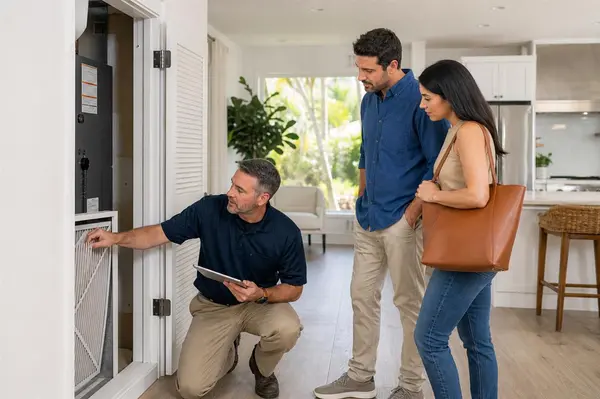
This is one of the simplest homeowner tasks and one of the most overlooked. A dirty filter restricts airflow, makes the A/C work harder, and can leave certain rooms feeling warmer than they should.
FPL specifically recommends changing air filters so the system can run as efficiently as possible. In Miami's hot, humid climate, checking the filter monthly during heavy cooling season is a smart habit.
If your home gets dusty quickly, if you have pets, or if the unit seems to run longer than usual, a clogged filter may be part of the problem. A low-cost replacement can improve both comfort and efficiency.
3. Block heat before it gets inside
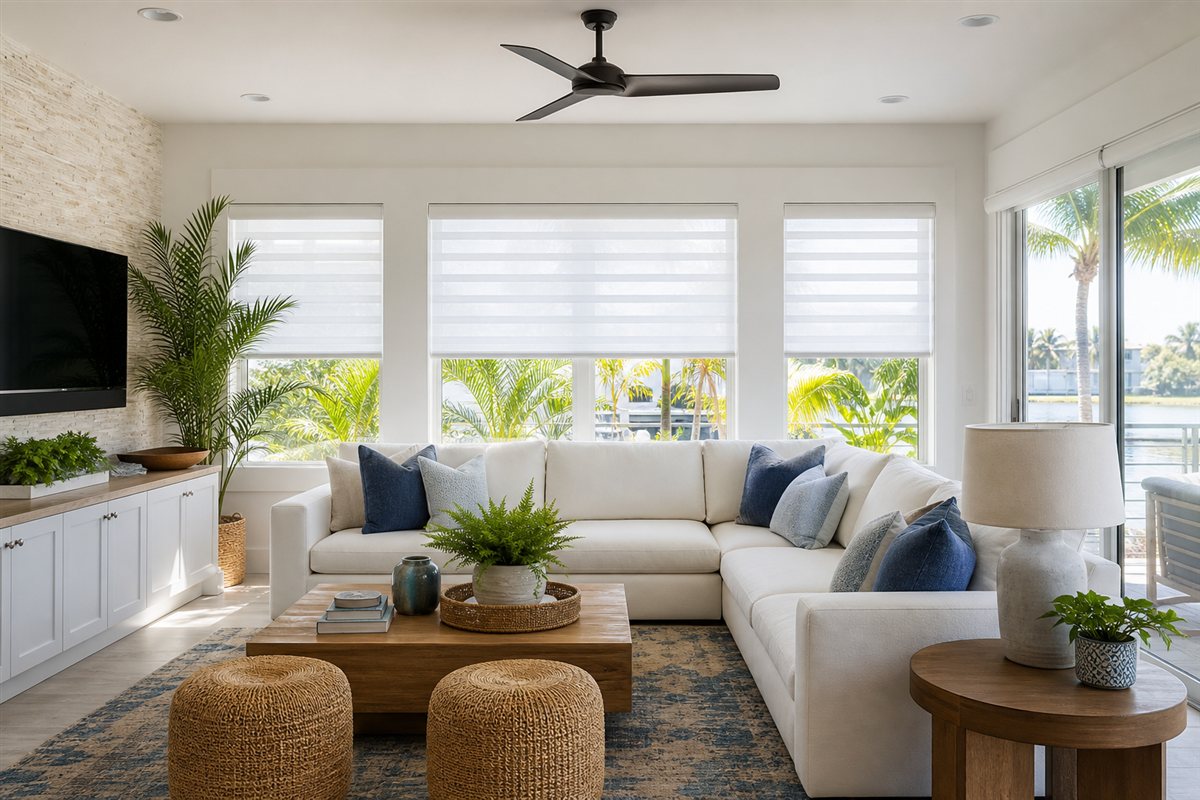
South Florida sun can heat up a room even when the air conditioning is running properly. That is why window management matters more than many homeowners realize.
FPL recommends closing shades, blinds, and drapes to keep the sun's heat out. The Department of Energy similarly highlights shading and efficient windows as important parts of cooling a home.
This does not mean living in the dark all summer. It means being strategic:
- close blinds on the sunniest side of the house during peak afternoon hours
- use light-filtering shades where you still want daylight
- consider blackout or solar shades in rooms that overheat
- add outdoor shade where possible through landscaping, awnings, or covered spaces
This small shift can noticeably reduce heat gain, especially in west-facing rooms.
4. Use ceiling fans the right way
Ceiling fans do not lower the air temperature, but they can make a room feel cooler by improving air movement. That can help you stay comfortable without immediately lowering the thermostat.
In summer, make sure the fan is spinning in the correct direction to push air downward. If your fan is decorative but rarely used, now is a good time to put it to work.
For Miami homeowners, this is one of the easiest comfort upgrades available. It is especially helpful in living rooms, bedrooms, and covered outdoor areas where you spend the most time.
5. Look for air leaks around doors and windows
Cool air escaping and hot, humid air sneaking in can quietly undermine the entire system. Even a good A/C unit has to work harder when the house is poorly sealed.
Walk through the home and pay attention to:
- light visible around door edges
- worn weatherstripping
- drafty sliding doors
- gaps around older windows
- warm spots near exterior openings
The Department of Energy consistently points to sealing and insulating the building envelope as a major part of improving home comfort. For many South Florida homes, especially older ones, sealing small leaks is one of the best low-cost ways to reduce strain on the cooling system.
6. Do not ignore humidity
Miami homeowners know that a house can feel uncomfortable even when the thermostat number looks fine. High humidity can make the air feel heavier, warmer, and harder to live with.
The Department of Energy notes that in hot, humid climates, dehumidification is essential to comfort. If your home feels damp, muggy, or clammy, it may be worth checking whether:
- the system is oversized and cycles off too quickly
- bathroom fans are being used consistently
- filters and drain lines need service
- a portable or whole-home dehumidifier would help in problem areas
Lower humidity can make the same room feel noticeably cooler without pushing the thermostat lower all day.
7. Keep heat-producing appliances from working against you
Home comfort is not only about the air conditioner. It is also about how much extra heat you create inside the house.
FPL recommends using smaller appliances like a microwave, toaster oven, or air fryer instead of the full oven when possible. That matters in summer because every extra source of indoor heat gives your cooling system more work to do.
You can also help by:
- running the dishwasher later in the evening
- doing laundry in cooler parts of the day
- switching older bulbs to LEDs
- keeping the dryer lint trap clean so drying cycles finish faster
These may sound like small habits, but together they can make the home feel better and reduce energy waste.
8. Know when your A/C is telling you it is aging out
Sometimes rising bills are not just a behavior issue. They are a sign that the equipment is no longer performing efficiently.
FPL notes that newer A/C units tend to be more energy efficient, and its rebate program highlights common warning signs such as systems that are more than 10 years old, need frequent repairs, or work overtime to keep the home cool.
If that sounds familiar, it may be time to get quotes and compare options before the unit fails in the hottest part of the year. Replacing an aging system is not a small purchase, but in the right home it can improve comfort, reliability, and monthly carrying costs.
9. Think about insulation and attic heat
Many homeowners focus only on the thermostat and forget how much heat builds above the ceiling. In Florida homes, attic conditions can heavily affect indoor comfort.
FPL offers rebates for ceiling insulation upgrades, and the Department of Energy notes that insulation and radiant-barrier strategies can help reduce cooling demand in hot climates.
This does not mean every home needs a major attic project tomorrow. It does mean insulation is worth considering if:
- upstairs rooms stay noticeably hotter
- the A/C runs constantly in the afternoon
- the home is older and has never had an energy upgrade
- your inspector or HVAC technician has flagged attic heat issues
This is one of those improvements that can support both daily comfort and resale appeal.
10. Use your utility tools, not just your bill total
Many homeowners do not look at their usage patterns until they are frustrated by a large monthly bill. By then, it is harder to know what actually changed.
FPL's Energy Manager and related usage tools are designed to help homeowners see how and when energy is being used. That can make it easier to spot spikes, compare habits, and decide whether the real issue is equipment, scheduling, insulation, or daily routines.
Understanding your numbers gives you more control. It turns homeownership into something proactive rather than reactive.
11. Treat comfort upgrades as value upgrades too
In Miami real estate, buyers are not only looking at finishes and photos. They are also thinking about how a home lives day to day. If a space feels bright, cool, efficient, and well maintained, that creates confidence.
Practical cooling improvements can support that impression:
- smart thermostats
- better shading
- newer A/C equipment
- improved insulation
- sealed doors and windows
- cleaner, better-functioning vents and returns
These upgrades may not be as flashy as a kitchen remodel, but they often improve daily quality of life immediately. They can also make a home more attractive to future buyers who are thinking about utility costs, comfort, and maintenance from the first showing onward.
Final takeaway for Miami and South Florida homeowners
Keeping a home cooler in summer is not about one magic fix. It is usually the result of several smart choices working together: better shading, better airflow, regular A/C maintenance, realistic thermostat settings, and efficiency upgrades where they matter most.
For Miami and South Florida homeowners, those choices can lower stress, improve comfort, and help protect long-term property value. A home that stays comfortable without wasting energy is simply easier and more affordable to enjoy.
If you are thinking about buying, selling, improving, or understanding the value of your home, contact William Gartin with eXp Realty at 305-842-6097 or visit williamgartinrealestate.com. William helps Miami and South Florida homeowners make smart decisions about property value, homeownership, and the next step for their future.
Categories
Recent Posts