Miami Pantry Organization Ideas That Make Storm Season and Everyday Cooking Easier
In Miami, a pantry is more than a place to keep cereal, pasta, and canned goods. During hurricane season, rainy afternoons, school weeks, and busy workdays, a well-organized pantry can make the whole home feel calmer and more prepared. As of July 6, 2026, South Florida homeowners are already well into hurricane season, which makes this a smart time to look at how your kitchen storage supports both daily life and emergency readiness.
The goal is not to turn your pantry into a warehouse. The goal is to build a system that helps you see what you own, protect food from humidity and pests, rotate storm supplies before they expire, and make weeknight cooking easier. For Miami homeowners, that kind of practical home improvement can improve comfort today while also making a kitchen feel more cared for when it is time to evaluate property value, prepare for resale, or simply enjoy the home more.
Start With Three Pantry Zones
The easiest pantry systems are built around how your family actually uses food. Instead of organizing only by container size or shelf height, divide the pantry into three working zones: everyday cooking, backup staples, and storm-season supplies.
The everyday cooking zone should be the easiest to reach. Keep oils, seasonings, rice, pasta, breakfast items, snacks, lunchbox supplies, coffee, tea, and the ingredients you use most often between waist and eye level. If you cook frequently, this zone should feel almost like a workstation. Clear bins, lazy Susans, and shallow baskets help you pull items forward without losing smaller jars in the back.
The backup staple zone is for extras you know you will use, but not every day. This might include unopened flour, extra paper goods, canned tomatoes, broth, sauces, pet food, and bulk snacks. Keep this zone neat and limited. A pantry that is packed too tightly becomes hard to inspect, which can lead to expired food, duplicate purchases, and hidden pest problems.
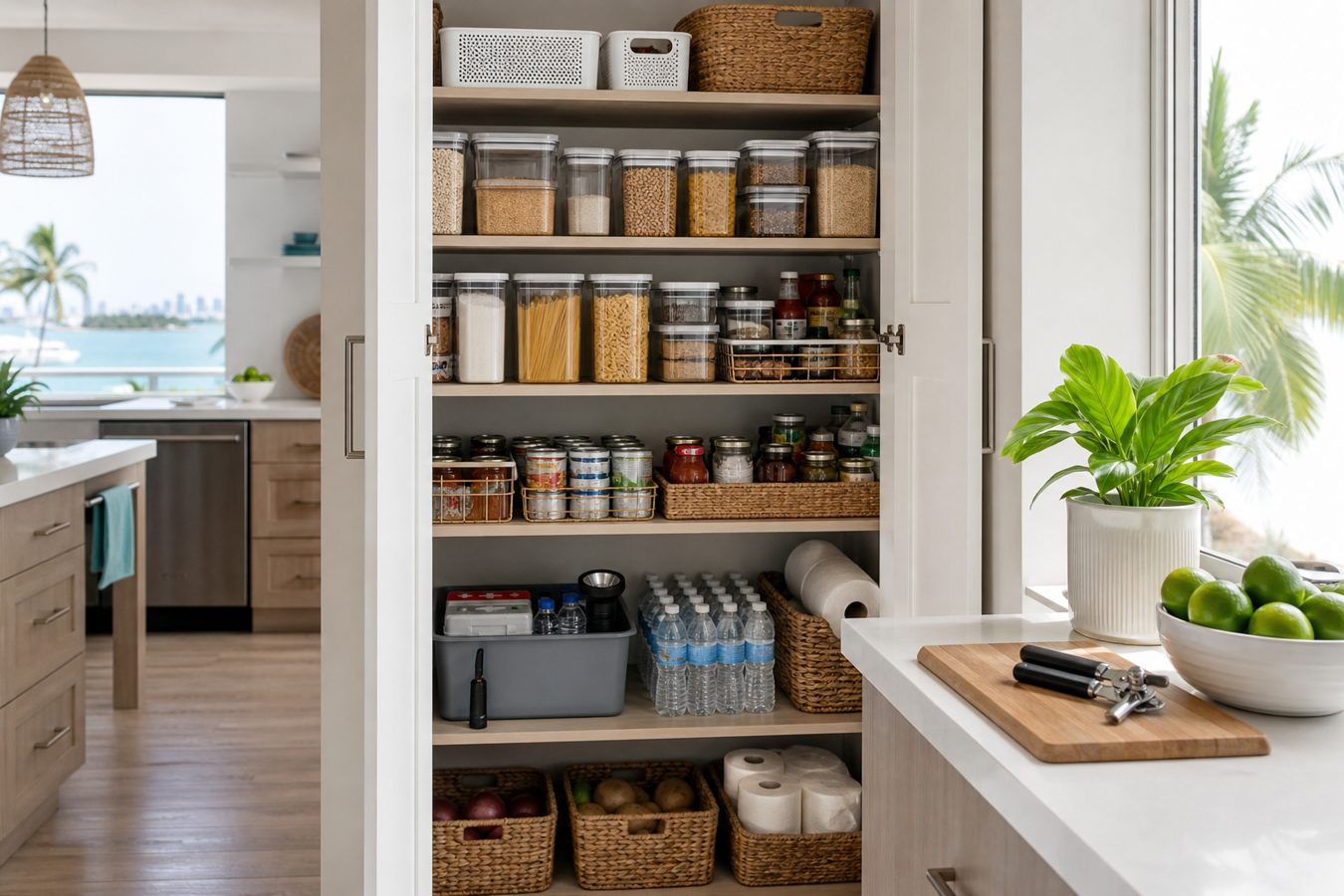
The storm-season zone should be simple, visible, and easy to grab. Miami-Dade County recommends keeping hurricane supplies in one place and checking the kit at least once a year. In the pantry, that can mean one labeled shelf or bin for shelf-stable meals, bottled water overflow, a manual can opener, batteries, flashlights, wipes, pet supplies, and a printed checklist. If your pantry is small, use a rolling bin in a nearby closet instead of forcing everything into the kitchen.
Use Airtight Containers Where They Actually Matter
Airtight containers can make a pantry look polished, but in South Florida they also serve a practical purpose. Humidity, heat, and open packaging can shorten freshness and make it easier for pantry pests to spread. UF/IFAS notes that stored food pests can appear in many pantry foods and that tightly closed containers, regular inspection, and rotation are key control steps.
Use airtight containers for flour, rice, cereal, pasta, crackers, nuts, baking mixes, pet treats, and anything that comes in a paper or thin plastic package. You do not need to decant every single item. Prioritize foods that are opened often, foods that attract insects, and foods your family buys in bulk. Add the expiration date or purchase date with painter's tape or a removable label on the bottom or back of the container.
If you are organizing a pantry before listing a home, this is one of the most affordable presentation upgrades. Clear containers, uniform baskets, and clean shelf spacing photograph well and help buyers imagine a kitchen that functions smoothly. That matters whether the home is a single-family property in Pinecrest, a family home in Cutler Bay, a Palmetto Bay residence, a townhouse in Doral, or one of South Florida's waterfront homes.
Build a Storm Shelf Without Overbuying
One common pantry mistake is buying a large amount of emergency food in June, forgetting about it, and discovering expired items the next year. A better approach is to build a rotating storm shelf. Stock foods your household will actually eat, then rotate them into regular meals before they expire.
Miami-Dade's hurricane kit checklist recommends a seven-day supply of non-perishable foods and water, including one gallon of water per person per day, plus supplies for pets. For many homes, the pantry can hold part of that supply while the rest lives in a nearby laundry room, hall closet, garage shelf, or utility space. The key is having one inventory list so you are not searching the house when a storm warning is issued.
Think in meal groups instead of random cans: breakfast, lunch, dinner, snacks, baby or senior needs, pet needs, and comfort items. Add a manual can opener to the bin and keep a few no-cook meals available in case power is out and cooking is limited.
Plan for Power Outages Before They Happen
Pantry organization also connects to refrigerator and freezer planning. FoodSafety.gov notes that a refrigerator can keep food safe for up to four hours during a power outage if the door stays closed, and that a full freezer can hold temperature for about 48 hours if kept closed. That means your pantry should include enough shelf-stable food to avoid opening the refrigerator repeatedly during an outage.
Keep a small note inside the pantry with outage reminders: avoid opening the refrigerator, use shelf-stable foods first, keep a thermometer available, and discard questionable perishables instead of tasting them. This is especially helpful for families, guests, older adults, and anyone who may be home when the primary household organizer is away.
Watch Humidity, Moisture, and Odors
Miami kitchens deal with humidity even when everything looks clean. EPA guidance is clear that moisture control is the key to mold control. In a pantry, that means watching for leaks, condensation, musty smells, swollen packaging, damp walls, and warped shelving.
A few simple habits help. Do not store dry goods directly on the floor. Leave breathing room between the back wall and baskets. Wipe shelves before restocking. If the pantry shares a wall with a bathroom, laundry area, or exterior wall, inspect it after heavy rain.
For odors, avoid heavy fragrances. The best pantry smell is clean and neutral. Remove expired food, wipe sticky jars, vacuum crumbs, and keep onions or potatoes in ventilated baskets away from strong-smelling cleaning products. If the pantry still smells musty after cleaning, look for moisture rather than masking it.
Add Small Upgrades That Feel Custom
You do not need a full kitchen renovation to make a pantry feel more valuable. Start with better lighting. A battery-powered motion light or low-profile LED strip can make deep shelves easier to use. Add pull-out bins for snacks, labeled baskets for kids' items, a shelf riser for canned goods, and a lazy Susan for oils, vinegars, or spices.
If you are planning a larger kitchen update, consider pull-out pantry shelves, drawers inside tall cabinets, vertical tray dividers, and a shallow cabinet for spices. These details make a home feel more efficient, which can matter to buyers comparing South Florida homes in Coral Gables, Weston, Kendall, and Pembroke Pines.
A Quick Miami Pantry Reset Checklist
- Remove everything and wipe shelves before reorganizing.
- Group food into everyday, backup, and storm-season zones.
- Use airtight containers for opened dry goods and pest-prone items.
- Write expiration dates where you can see them.
- Keep a manual can opener with the hurricane food shelf.
- Store emergency supplies in one known place and update them yearly.
- Check for moisture, leaks, musty odors, and swollen packaging.
- Rotate older food forward so it gets used first.
- Avoid overstocking shelves with products your family rarely eats.
- Add lighting or pull-out bins if deep shelves are hard to use.
Why This Matters for Homeownership
Small organizational upgrades may not show up on an appraisal as a line item, but they affect how a home lives and how it presents. A kitchen that feels orderly, clean, and prepared gives the impression of a well-maintained home. It can reduce food waste, limit duplicate grocery spending, and make daily routines easier.
For Miami and South Florida homeowners, that is the sweet spot: practical comfort now, better home presentation later, and smarter planning around the realities of local homeownership. Whether you plan to stay for years or are thinking about selling in the future, a pantry reset is a low-cost project that can make the entire kitchen feel better.
Helpful Sources
- Miami-Dade County hurricane preparedness guidance
- Miami-Dade County hurricane kits and checklists
- FoodSafety.gov power outage food safety chart
- EPA mold and moisture guidance
- UF/IFAS pantry and stored food pest guidance
Thinking About Your Home's Value?
If you are improving your home, preparing for storm season, getting ready to sell, or simply wondering which upgrades are worth your time, William Gartin with eXp Realty can help you think through the real estate side of the decision.
William Gartin is a Miami and South Florida Realtor who helps homeowners understand property value, neighborhood demand, smart preparation, and long-term planning.
William Gartin with eXp Realty
305-842-6097
williamgartinrealestate.com
Categories
Recent Posts