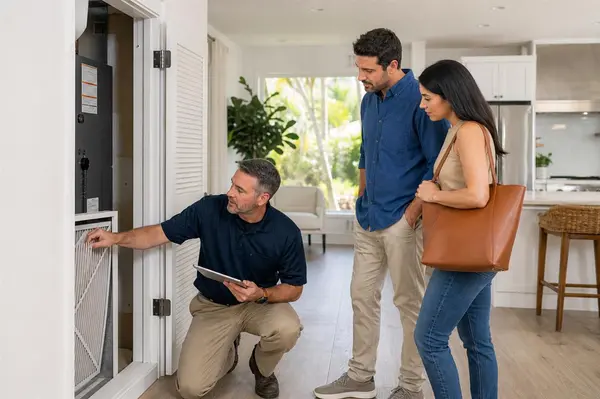
Miami Real Estate News for September 14, 2026: Sidewalks, Rates and Neighborhood Value
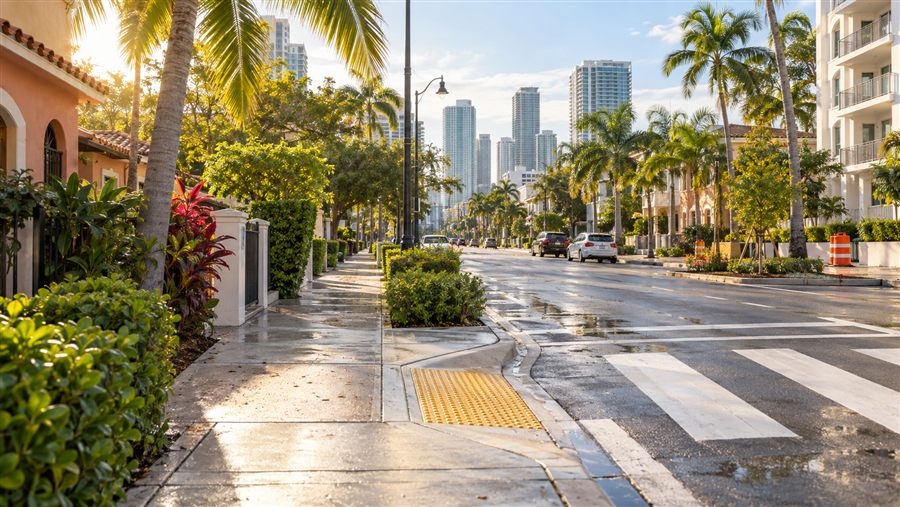
Miami real estate news for Monday, September 14, 2026 starts with something quieter than a tower crane, but just as important to daily life: sidewalks. A fresh Axios Miami report spotlighted Little Havana civic advocate Patricia Garcia and her push for more accessible sidewalks, better crossings, cleaner public spaces and more responsive local government.
That may sound like a neighborhood quality-of-life story, not a real estate story. In Miami, it is both. Sidewalks, curb ramps, crosswalks, drainage, lighting and safe routes to school or transit all shape how a neighborhood feels once you actually live there. They affect seniors, families with strollers, wheelchair users, students, commuters, renters, condo owners and buyers who are trying to understand the block beyond the listing photos.
Why Sidewalks Are A Real Estate Signal
Axios reported that Garcia, a Little Havana resident, product manager and Miami Dade College instructor, has used social media documentation to flag issues such as illegal dumping, missing sidewalks and places where pedestrians are forced into the street. She also pointed to funded sidewalk projects and accessible pathways in Little Havana and around the Medical District as examples of how persistent resident advocacy can produce visible improvements.
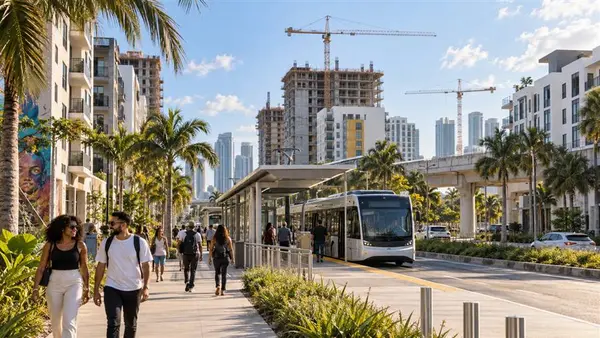
For buyers, that is a reminder to walk the neighborhood at the times you would actually use it. Is the route to the grocery store, school, park, transit stop or cafe comfortable? Are sidewalks continuous? Are curbs accessible? Does rain pool at crossings? Are there shaded blocks, working signals and safe places to cross? In a city where traffic and heat are both part of the lifestyle equation, walkability is not a bonus feature. It is part of value.
For sellers, this is also a marketing point. A home or condo near improving pedestrian infrastructure can tell a more complete story than square footage alone. If the neighborhood is getting safer crossings, repaired sidewalks, better lighting or greener routes, that helps buyers imagine everyday life there.
Little Havana Has An Official Pedestrian Priority Project
The City of Miami's Little Havana Pedestrian Priority Zone Phase I gives this issue more weight. The city describes the project as a partnership with the State of Florida to improve pedestrian safety and quality of life in District 3. The current project status is listed as construction, with a cost estimate of about $5.5 million.
The scope includes sidewalks, ADA ramps, pedestrian crosswalks, planter islands, landscaping, lighting, milling and resurfacing, pavement markings and related drainage relocations. The listed boundaries include NW 6 Street between NW 22 Avenue and NW 19 Avenue, SW 10 Avenue between W Flagler Street and SW 5 Street, plus several SW 2 Street intersections.
That is exactly the type of infrastructure detail Miami residents should track. Little Havana is already one of Miami's most recognizable neighborhoods, with culture, location and urban character that buyers understand quickly. But the next layer of neighborhood value comes from whether public space is improving along with demand.
Miami-Dade Treats Sidewalk Access As A Countywide Issue
Miami-Dade County's sidewalk accessibility guidance says accessible sidewalks need curb cuts that help people with disabilities move safely between the roadway and a curbed sidewalk. The county also says sidewalk complaints are investigated after residents submit service requests through 311, and that priority repairs focus on areas near transit, schools, hospitals, health facilities, nursing homes, libraries, parks, courts and other public destinations.
That matters beyond Little Havana. If you are comparing neighborhoods across Miami-Dade, do not evaluate only the property interior. Evaluate the public realm. A buyer choosing between two similar condos may feel very differently if one building has safer access to transit, medical campuses, parks and neighborhood retail while the other requires driving for every basic errand.
Rates Are Making Livability More Important
Interest rates are not giving buyers much room to be casual. Freddie Mac's September 10, 2026 Primary Mortgage Market Survey put the average 30-year fixed-rate mortgage at 6.76%, up from 6.71% the prior week, and the average 15-year fixed rate at 6.09%.
Daily rate trackers were even firmer on September 14. Mortgage News Daily showed a 30-year fixed index at 7.12%, while NerdWallet's morning rate table showed a 30-year fixed rate around 7.08% with a 7.09% APR. These are national averages, not a quote for any one borrower, but they explain the buyer mindset: when payment is tight, buyers become more selective about location, condition, insurance, HOA fees, commuting patterns and everyday convenience.
That is why sidewalk improvements belong in the same conversation as rates. If the monthly payment is higher, buyers want more confidence that the property will actually work for the way they live. A better pedestrian network can support that confidence, especially in dense Miami neighborhoods where parking, traffic and access are part of the daily decision.
The Latest Miami-Dade Market Data Still Shows Demand
The latest MIAMI REALTORS + RWorld release, covering July 2026, shows Miami-Dade total home sales rose 8.6% year over year to 1,935 transactions. Single-family sales increased 5.6%, existing condo sales increased 11.4%, and $1 million-plus sales rose 15.5%.
The important split is inventory. Single-family homes had 4.8 months of supply in July, which points to a seller's market. Existing condos had 12 months of supply, which gives buyers more room to compare buildings, fees, reserves and location quality. Total active listings were down 15.1% year over year, and condo inventory had declined for a sixth straight month.
For Miami buyers, the message is not simply "the market is hot" or "the market is soft." It depends on property type, neighborhood, building condition and financing path. Walkability and public-space improvements can be part of that difference, especially in older urban neighborhoods where the street experience changes block by block.
A Downtown Construction Note For Tonight
The I-395/S.R. 836/I-95 Design-Build Project also posted a September 12 traffic alert that affects Monday night. All southbound lanes on I-95 are scheduled to close at S.R. 836 from 11:59 p.m. on September 14 to 5:30 a.m. on September 15 while crews move a crane across the roadway. The southbound I-95 ramp to eastbound I-395 is also scheduled to close during that window.
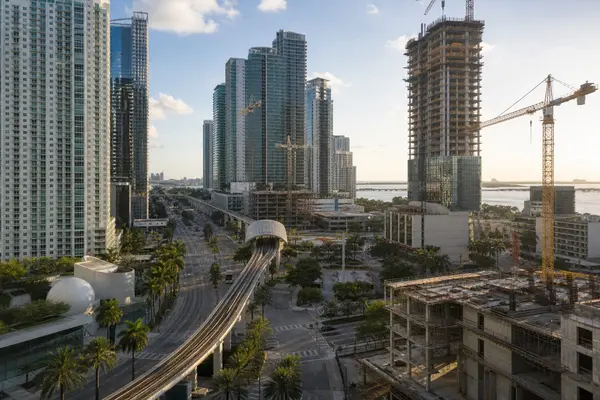
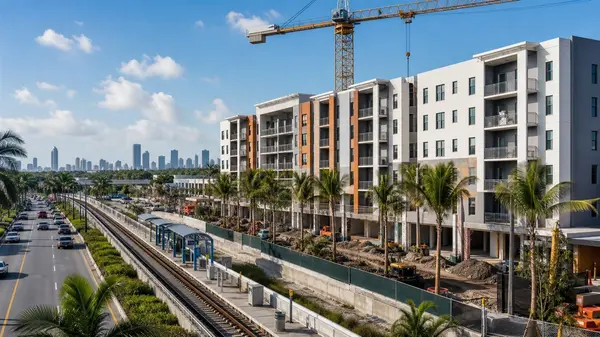
This is a practical reminder for Downtown, Overtown, Edgewater, Wynwood, the Health District, Brickell-adjacent commuters and anyone heading toward Miami Beach late tonight. Major infrastructure work can support long-term access and urban growth, but in the short term it changes how people experience a property, especially during showings, late work shifts, airport runs and cross-bay plans.
What Buyers Should Do This Week
If you are shopping in Miami right now, build a street-level checklist. Walk the block. Test the route to transit, school, parks, grocery, work and restaurants. Ask whether sidewalks flood, whether construction is active nearby, whether traffic patterns are changing and whether the building or home still makes sense when rates, insurance and taxes are added to the monthly payment.
For condos, keep the building review just as serious as the neighborhood review. Ask about reserves, assessments, insurance, recertification, rental rules, litigation and loan eligibility early. A condo in a walkable neighborhood can be a strong lifestyle play, but only if the building's financial and physical condition support the purchase.
What Sellers Should Watch
Sellers should make livability obvious. If your property benefits from safe sidewalks, parks, transit, medical access, restaurants, schools or recent public-space improvements, do not bury that in a generic description. Today's buyers are doing the math, and the neighborhood story helps them understand why the property is worth the payment.
For single-family sellers, the market is still tighter than the condo market, but buyers are rate-sensitive. Show the roof, insurance profile, drainage, parking, landscaping, commute and neighborhood access clearly. For condo sellers, make the association documents easy to review and be ready to explain what makes your building easier to finance, insure and live in.
The Miami Bottom Line For September 14
Today's Miami real estate story is about the details that make a neighborhood livable. Little Havana sidewalk advocacy, official pedestrian improvements, countywide accessibility priorities, elevated mortgage rates, shifting inventory and downtown construction all point to the same idea: Miami real estate is not just about what is inside the property line.
It is about how the block works. It is about whether the neighborhood is becoming safer, more connected and easier to navigate. It is about whether the building, payment and location all make sense together.
If you are thinking about buying, selling or simply trying to understand what today's Miami real estate news means for your neighborhood, reach out to William Gartin Real Estate. I can help you read the market block by block, building by building, and make a plan that fits the way you actually live in South Florida.
Sources
- Axios Miami, September 14, 2026: Miami activist uses social media to demand better sidewalks
- City of Miami: Little Havana Pedestrian Priority Zone Phase I
- Miami-Dade County: Sidewalk Accessibility
- Freddie Mac Primary Mortgage Market Survey, September 10, 2026
- Mortgage News Daily mortgage rate index, September 14, 2026
- NerdWallet mortgage rates, September 14, 2026
- MIAMI REALTORS + RWorld: Miami-Dade Total Home Sales Rise for 11th Consecutive Month
- I-395/S.R. 836/I-95 Design-Build Project traffic alert, September 12, 2026
Categories
Recent Posts